Introduction
Your phone rings at 9 PM. A customer's AC just died in 95-degree heat. They need help now. But you're at your kid's soccer game, and the call goes to voicemail. They call the next contractor on Google. You just lost a $3,500 job.
This happens more than you think. Industry research shows home services contractors miss 60-80% of incoming customer calls. Customer service data reveals that three out of every four potential customers are calling someone else because you didn't answer.
In this guide, you'll see the 7 best AI receptionists for small businesses in 2025, with transparent pricing, real ROI calculations, and honest advice on when AI works (and when it doesn't). More importantly, you'll learn exactly which features matter and how to choose the right platform for your business.
See how NextPhone handles the calls you're missing →
Why Small Businesses Need AI Receptionists
Every unanswered call is a potential customer choosing your competitor. For home services businesses, the math is brutal.
The Hidden Cost of Missed Calls
Let's say you get 42 calls per month—that's the average for contractors in our industry research. If 60-80% go unanswered like the data shows, that's 25-33 missed calls monthly. If just 20% of those callers would've hired you at an average $3,500 project value, you're losing $17,500-$23,100 per month. That's $210,000-$277,000 per year.
But it's not just the missed revenue. The damage goes deeper.
Your reputation takes a hit. When calls go unanswered, customers assume you're too busy to care about new business or too disorganized to manage your schedule. They don't think "he must be on a job site." They think "unprofessional" and call the next contractor.
Emergency calls are critical. Customer service analysis shows that 15.9% of calls contain urgency language—phrases like "emergency," "urgent," or "ASAP." These customers need help NOW, not a callback tomorrow. When your AC dies in July or your pipe bursts on Sunday morning, you're calling five contractors. The first one to answer gets the job.
Callback requests pile up. Industry data reveals that 25.4% of callers explicitly ask for callbacks. That's one in four people leaving their number and waiting for you to call back. Without a system to track these, research shows 42% never get returned. Each one is a lead that needed nurturing, not a voicemail that sits unheard for days.
One contractor told us: "I didn't even know I was missing that many calls until I saw the data. I just thought business was slow."
Why Traditional Solutions Fall Short
Most small businesses try one of three approaches, and all fall short.
Hire a receptionist. At $35,000 per year plus benefits (call it $45K all-in), you're spending $3,750 per month. They work 9-5. What about the evening and weekend calls? Those still go to voicemail. And when they're sick or on vacation? Back to missing calls.
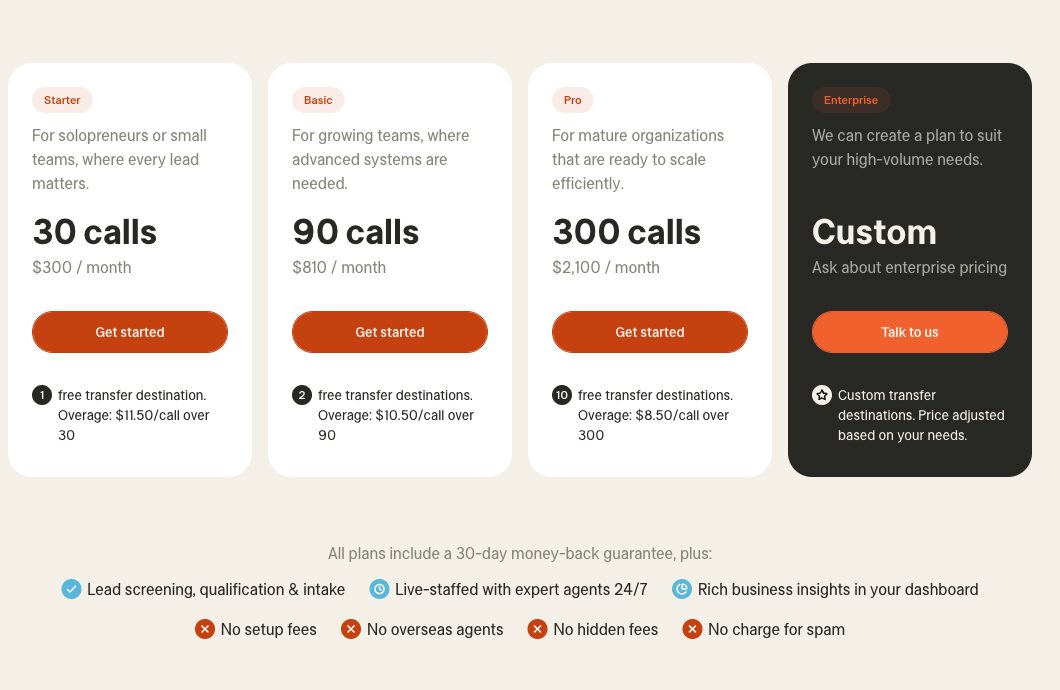
Use a traditional answering service. Live answering services like Ruby Receptionists or AnswerConnect charge $500-800/month for 100 calls. If you're getting 42 calls/month, that's manageable. But during busy season when volume doubles? That bill hits $1,500-2,000/month with overage charges.
Just let it ring. This is what most small businesses do. Free, right? Except it's costing you six figures in lost revenue annually.
None of these solutions work for businesses with unpredictable call volume, tight margins, or after-hours emergencies.
That's where AI changes the game.
The After-Hours Problem
Here's what most contractors don't realize: A significant portion of customer calls happen outside normal business hours. People call when they have time—during their lunch break, after work, on weekends.
Emergency calls don't follow a 9-5 schedule. Pipes burst at midnight. AC units die on Saturday afternoons. Roofs start leaking during Sunday rainstorms.
If you're not answering these calls, someone else is.
How AI Receptionists Solve This
An AI receptionist answers every call in under 5 seconds. 24 hours a day, 7 days a week, 365 days a year. No sick days. No vacation time. No "I'm with another customer" delays.
For $79-299/month—less than what you'd pay a part-time employee for one week—you get unlimited call coverage. The AI handles routine questions (hours, pricing, service area), books appointments directly into your calendar, and routes urgent calls to your phone immediately.
Let's look at the real numbers: Human receptionist: $3,100-4,300/month Live answering service: $500-800/month for 100 calls AI receptionist: $79-299/month for unlimited calls Cost of missed calls: $21,000/month in lost revenue (average contractor)
The ROI isn't just good. It's ridiculous.
See how AI receptionist captures these calls →
What Is an AI Receptionist (And How Does It Work)?
If you're picturing a robotic voice from a 1990s phone tree, forget it. Modern AI receptionists sound natural, understand conversational language, and handle calls more like a human assistant than a machine.
How AI Receptionist Technology Works
Here's what happens when someone calls your business:
The call comes in. Your AI receptionist answers in under 5 seconds (usually 2-3 rings). The customer says something like "Hey, I need someone to look at my roof. There's water coming through the ceiling."
The AI uses natural language processing (NLP) to understand what they're asking. Not just matching keywords, but understanding intent and context. It detects this is an urgent request (water damage = emergency) and routes accordingly.
For routine questions, it answers immediately from your business information. "Are you open Saturday?" → "Yes, we're open 9 AM to 5 PM on Saturdays." Done in 15 seconds.
For appointments, it checks your calendar in real-time and books the slot. "Can you come tomorrow afternoon?" → AI sees you're free at 2 PM → "I can schedule you for 2 PM tomorrow. What's your address?"
For emergencies or complex questions, it routes to your phone or takes a detailed message with all contact information.
Modern AI achieves 85-95% accuracy for routine inquiries. The key is training it on your specific business—what services you offer, how you price, your availability, your terminology.
AI Receptionist vs. Live Answering Service
Let's be clear about what we're comparing here.
Traditional live answering service:
- Real humans answering your calls (Ruby Receptionists, AnswerConnect, etc.)
- Answers in 30-90 seconds (they're juggling multiple clients)
- Costs $500-800/month for 100 calls, with overage charges
- Works during business hours (maybe extended hours for premium cost)
- Personal touch but slower and more expensive
AI receptionist:
- AI-powered system answering your calls
- Answers in under 5 seconds (instant)
- Costs $79-299/month for unlimited calls
- Works 24/7/365 with zero downtime
- Fast and affordable but less "warm and fuzzy"
The real difference? Speed and cost. AI wins both. But AI lacks the empathy and judgment humans provide for sensitive or complex calls.
That's why the hybrid model exists.
The Hybrid Model: Best of Both Worlds
The smartest approach isn't choosing between AI and humans. It's using both strategically.
Customer service automation data shows AI handles 60-80% of inquiries without human intervention. These are the routine questions: hours, pricing, availability, basic scheduling, service area.
The other 20-40%—the complex questions, emotional situations, custom project consultations—those go to humans.
Here's how hybrid models work: AI answers every call instantly. If it's routine, AI handles it completely. If it's complex, urgent, or the customer specifically asks for a human, the AI routes to you or your team immediately.
You get the best of both: AI speed and 24/7 coverage for routine calls, plus human judgment for the situations that need it.
Platforms like NextPhone, Smith.ai, and Abby Connect offer this hybrid approach. Pure AI platforms (My AI Front Desk, Dialzara) don't include human backup, which saves money but means the AI handles everything—even calls it's not equipped for.
What AI Can (and Can't) Do
Let's be honest about the capabilities and limitations.
AI CAN:
- Answer questions about hours, pricing, and service areas instantly
- Book appointments and check calendar availability in real-time
- Take detailed messages with contact information
- Detect urgency keywords and route emergency calls immediately
- Filter spam and robocalls (customer service data shows 7% of calls are spam)
- Handle multiple calls simultaneously (no busy signals)
- Work 24/7 without breaks or time off
- Learn from conversations and improve over time
AI CAN'T:
- Show empathy or emotional intelligence like humans
- Handle extremely nuanced or unique situations requiring judgment
- Read between the lines or pick up on subtle cues
- Build personal relationships with callers
- Make subjective decisions outside its training
- Understand industry slang or terminology it hasn't been taught
For most small business calls—especially in home services—the "CAN" list covers 60-80% of what comes in. The "CAN'T" list is why human backup matters.
NextPhone's hybrid AI+human approach handles both routine and complex calls seamlessly.
Key Features to Look for in an AI Receptionist
Not all AI receptionists are created equal. Here's what actually matters when you're comparing platforms.
Must-Have Features (Non-Negotiable)
These are the baseline features every decent AI receptionist should have:
Natural-sounding voice. If it sounds like a robot from 2010, customers will hang up. Modern AI voices from platforms like Rosie AI and NextPhone sound conversational with natural cadence and smooth handling of interruptions.
24/7 availability. This is the whole point. If it only works business hours, just hire a part-timer.
Appointment scheduling with calendar integration. Customer service patterns show 7.7% of calls are scheduling requests. The AI should connect to Google Calendar or Outlook, check your availability in real-time, and book appointments automatically.
Call routing to your phone for urgent or complex calls. The AI needs an "escape hatch" to send calls it can't handle to you or your team.
Detailed message taking with caller contact info. If the AI takes a message, you need name, number, reason for call, and best time to reach them.
These are table stakes. If a platform doesn't have all five, skip it.
Advanced Features Worth Paying For
These features cost extra but deliver serious value for the right businesses:
Emergency detection and smart routing. Customer service analysis shows 15.9% of calls contain urgency language—words like "emergency," "urgent," "ASAP," "today." For trades like plumbing, HVAC, and electrical, these are your highest-margin calls. AI that detects urgency and routes immediately to your phone is worth every penny.
Think about it: Customer calls saying "My AC died and it's 95 degrees" at 8 PM. Do you want that in voicemail? Or routed to your phone instantly so you can land a $3,500 emergency repair?
Callback request tracking. Industry data shows 25.4% of calls—that's one in four—include an explicit request for a callback. "Have him call me back when he gets a chance." Without a system tracking these, research reveals 42% never get returned. That's hundreds of lost leads per year.
Good AI receptionists log every callback request in your CRM or send you a text immediately with caller details.
Spam call filtering. Customer service data reveals 7% of incoming calls are spam or robocalls. That's roughly 3 spam calls per month if you're getting 42 total calls. Doesn't sound like much until you calculate the time cost: Each spam call wastes 1-2 minutes, plus the mental interruption. That's 3-6 wasted minutes per month, plus breaking your focus while you're on a job site or with a customer.
AI that automatically filters spam saves you hours annually.
CRM integration. The AI should automatically log every call, lead, and appointment into your CRM (Salesforce, HubSpot, Jobber, ServiceTitan, etc.). No manual data entry. No "I forgot to log that lead" situations.
Multi-language support. If you serve Spanish-speaking customers or other language groups, this is non-negotiable. But if 99% of your customers speak English, don't pay extra for it.
Custom call scripts for your business. Generic scripts sound robotic. The best AI receptionists let you customize how they answer, what questions they ask, and how they handle specific scenarios.
Integration Capabilities
Your AI receptionist doesn't work in isolation. It needs to play nice with your existing tools.
Must integrate with:
- Google Calendar or Outlook Calendar for appointment scheduling
- Your existing phone system (most work with any VoIP provider or via call forwarding from landlines)
- Popular CRM systems (at minimum: Salesforce, HubSpot, Zoho)
Nice to integrate with:
- Home services software (Jobber, ServiceTitan, Housecall Pro)
- Payment processors (Stripe, Square) for collecting booking deposits
- Zapier for custom integrations with 5,000+ other tools
- SMS/text platforms for text message follow-ups
- Email marketing tools (Mailchimp, Constant Contact)
The more integrations a platform offers, the less manual work you'll do transferring information between systems.
The Hidden Value Features (Often Overlooked)
These features don't make the marketing headlines, but they make your life easier:
Human backup (hybrid model). We covered this, but it's worth repeating: Pure AI is cheaper, but hybrid AI+human handles the 20-40% of calls AI can't. For just $50-100/month more, you get peace of mind that complex calls go to real people.
Call analytics and reporting. How many calls did you get last month? What percentage were answered? How many appointments were booked? Which calls were emergencies? Good platforms give you dashboards with this data.
Training and customization ease. Some AI receptionists require technical expertise to train. Others let you update scripts and responses in plain English. If you're not tech-savvy, prioritize platforms with simple training interfaces.
Voicemail transcription. When the AI takes a message, you get a text or email with the full transcription. You can scan it in 10 seconds instead of listening to a 2-minute voicemail.
After-hours mode customization. Maybe you want the AI to handle calls differently during business hours vs. after hours. Good platforms let you set custom rules for different times.
Integrations with popular business tools make AI receptionists much more powerful than standalone systems.
Top 7 AI Receptionists for Small Business (2025 Comparison)
Here's the comparison you came for: The best AI receptionist platforms for small businesses, with honest pros and cons.
Comparison at a Glance
| Platform | Best For | Pricing | Human Backup | Overall Rating |
|---|---|---|---|---|
| NextPhone | Hybrid AI+human for home services | $199/mo | Yes | ⭐⭐⭐⭐⭐ |
| My AI Front Desk | Budget-conscious small businesses | $79/mo | No | ⭐⭐⭐⭐ |
| Smith.ai | Established reliability | $240+/mo | Yes | ⭐⭐⭐⭐⭐ |
| Dialzara | Advanced features & customization | $99-299/mo | No | ⭐⭐⭐⭐ |
| Abby Connect | Strong human backup | $99+/mo | Yes | ⭐⭐⭐⭐½ |
| Synthflow | Maximum customization | $29+/mo | No | ⭐⭐⭐½ |
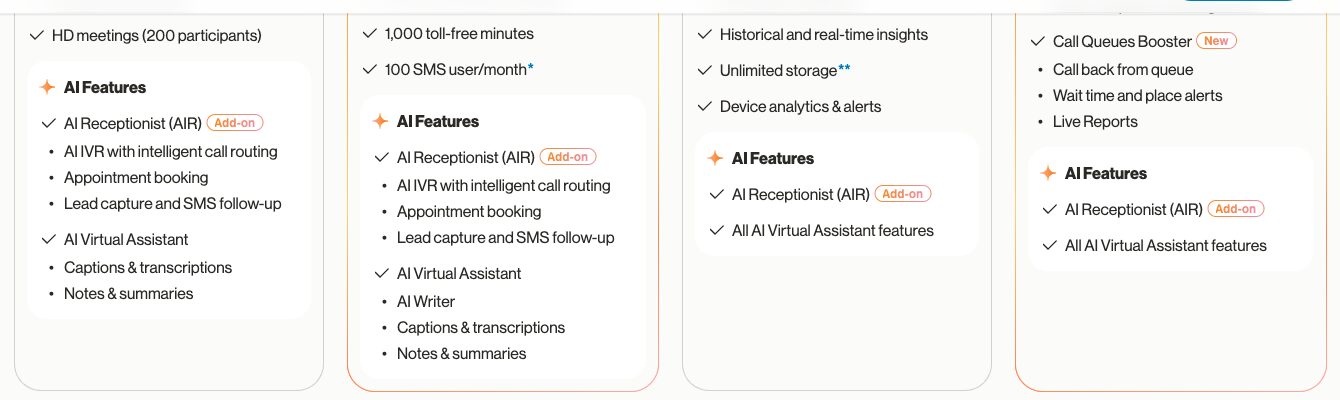
| RingCentral AI | Existing RingCentral users | $30-50/user/mo | No | ⭐⭐⭐ |
Now let's break down each platform in detail.
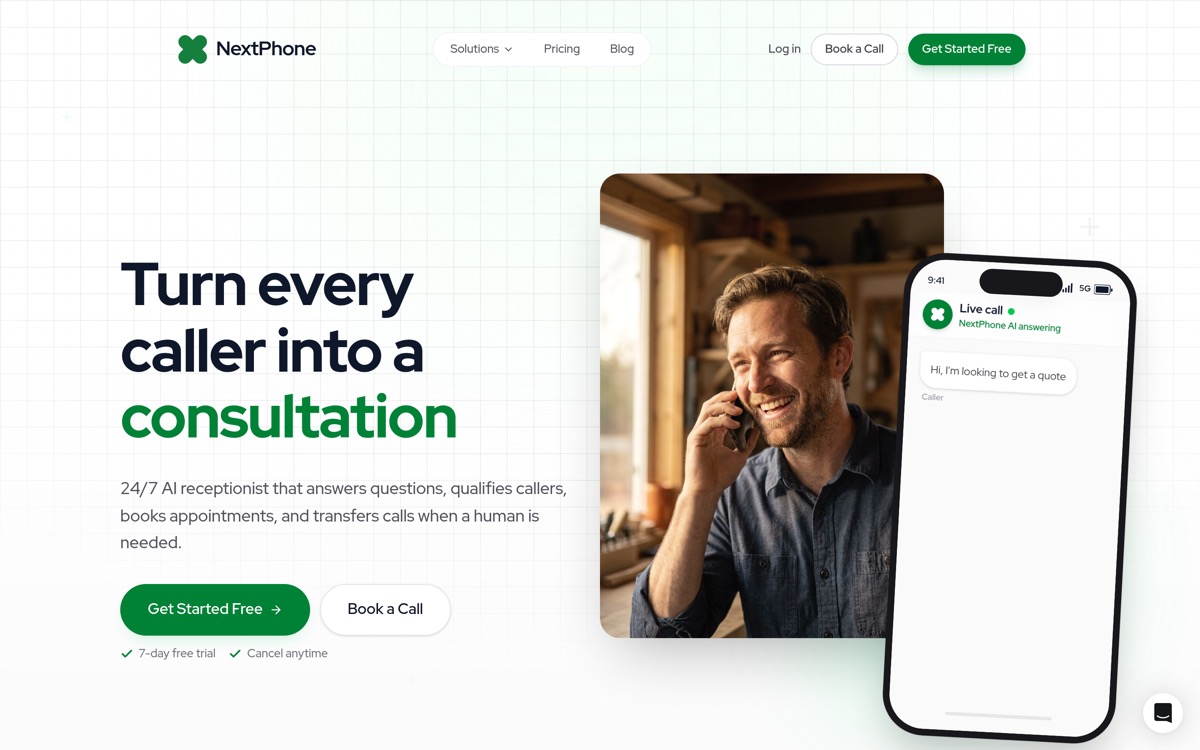
NextPhone: Best Hybrid AI + Human Model
Best for: Home services contractors who want AI efficiency with human backup
Pricing: $199/month flat rate, unlimited calls
Key Features:
- AI answers every call in under 5 seconds
- Handles routine questions (hours, pricing, service area)
- Emergency detection and immediate routing to your phone
- Calendar integration for automatic appointment booking
- Human backup for complex calls
- Spam filtering
- CRM integration (Jobber, ServiceTitan, HubSpot)
- Call summaries and analytics
Pros:
- True hybrid model (AI handles routine, humans handle complex)
- Built specifically for home services contractors
- Transparent flat-rate pricing (no per-minute surprises)
- Emergency routing tuned for trades (plumbing, HVAC, electrical)
- No setup fees
Cons:
- Mid-range price ($199/mo isn't the cheapest option)
- Newer platform (less brand recognition than Smith.ai)
Best fit for: Contractors and home services businesses getting 30+ calls/month who want AI efficiency but human backup for complex situations. If you're a plumber, HVAC contractor, electrician, roofer, or general contractor, NextPhone is built for your call patterns.
Real-world use case: An HVAC contractor can't answer his phone when he's on a roof or under a crawlspace. NextPhone's AI handles "What are your hours?" and "Can you come Thursday?" calls automatically. When someone calls with "My AC died and it's 95 degrees," the AI detects the urgency and routes immediately to his cell phone.
$199/month with 14-day free trial →
My AI Front Desk: Best Budget Option
Best for: Budget-conscious small businesses testing AI for the first time
Pricing: $79/month (billed annually) or $119/month (month-to-month)
Key Features:
- 24/7 AI call answering
- Appointment scheduling
- Basic call routing
- Text message capabilities
- Voicemail transcription
- 5-minute setup claim
Pros:
- Most affordable option ($79/mo if you pay annually)
- Unlimited calls included
- Very simple setup
- No per-call charges
- Good for very small businesses (under 20 calls/month)
Cons:
- No human backup (pure AI only)
- Limited advanced features (no emergency detection, basic CRM integration)
- Annual payment required for lowest price
- Less customization than competitors
Best fit for: Very small businesses testing AI for the first time, or businesses with low call volume (under 20/month) and simple, predictable questions.
Real-world use case: A small landscaping company gets 15 calls per month, mostly "What's your pricing?" and "Can you mow my lawn Thursday?" My AI Front Desk handles these for $79/month—way cheaper than missing even one $500 mowing contract.
Smith.ai: Best for Established Reliability
Best for: Professional services wanting premium, proven service
Pricing: Starting at $240/month (for 30 calls), scaling up based on volume
Key Features:
- AI receptionists + live North America-based agents
- Custom call scripts tailored to your business
- CRM integration (Salesforce, HubSpot, Clio for legal)
- Appointment scheduling
- Lead qualification
- Bilingual support (English/Spanish)
- 10+ years in business
Pros:
- Most established brand (operating since 2015)
- Excellent customer support
- Professional setup process
- Strong for professional services (legal, medical, consulting)
- Real humans available 24/7 as backup
Cons:
- Higher pricing ($240+ per month)
- Per-call pricing model means costs can escalate with volume
- Overage charges if you exceed plan limits
Best fit for: Professional services firms (legal, medical, consulting, real estate) where brand perception matters and you want a premium, white-glove service. Also good for businesses wanting established reliability over cutting-edge AI.
Real-world use case: A law firm needs every call handled professionally. Smith.ai's AI handles "What are your office hours?" and "Do you handle divorce cases?" while routing complex legal inquiries to their live agents. The firm pays $240/month for 30 calls and values the brand trust.
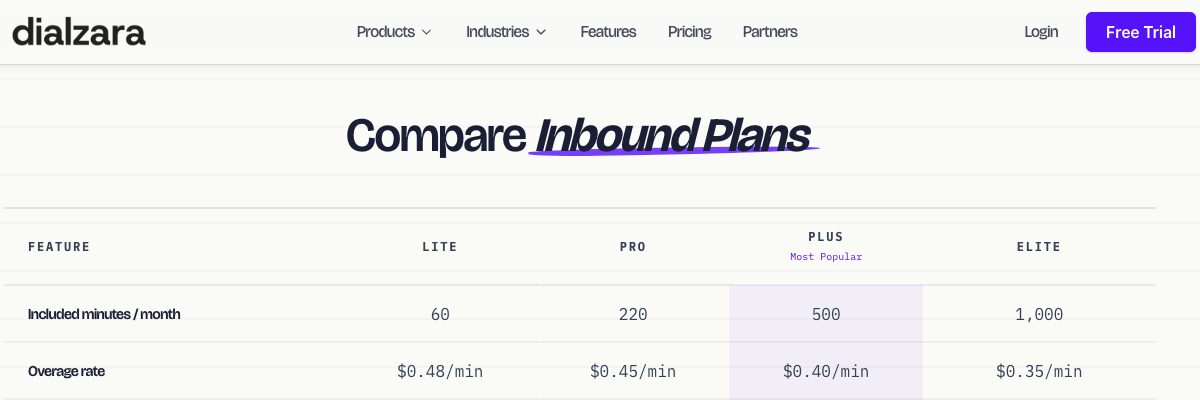
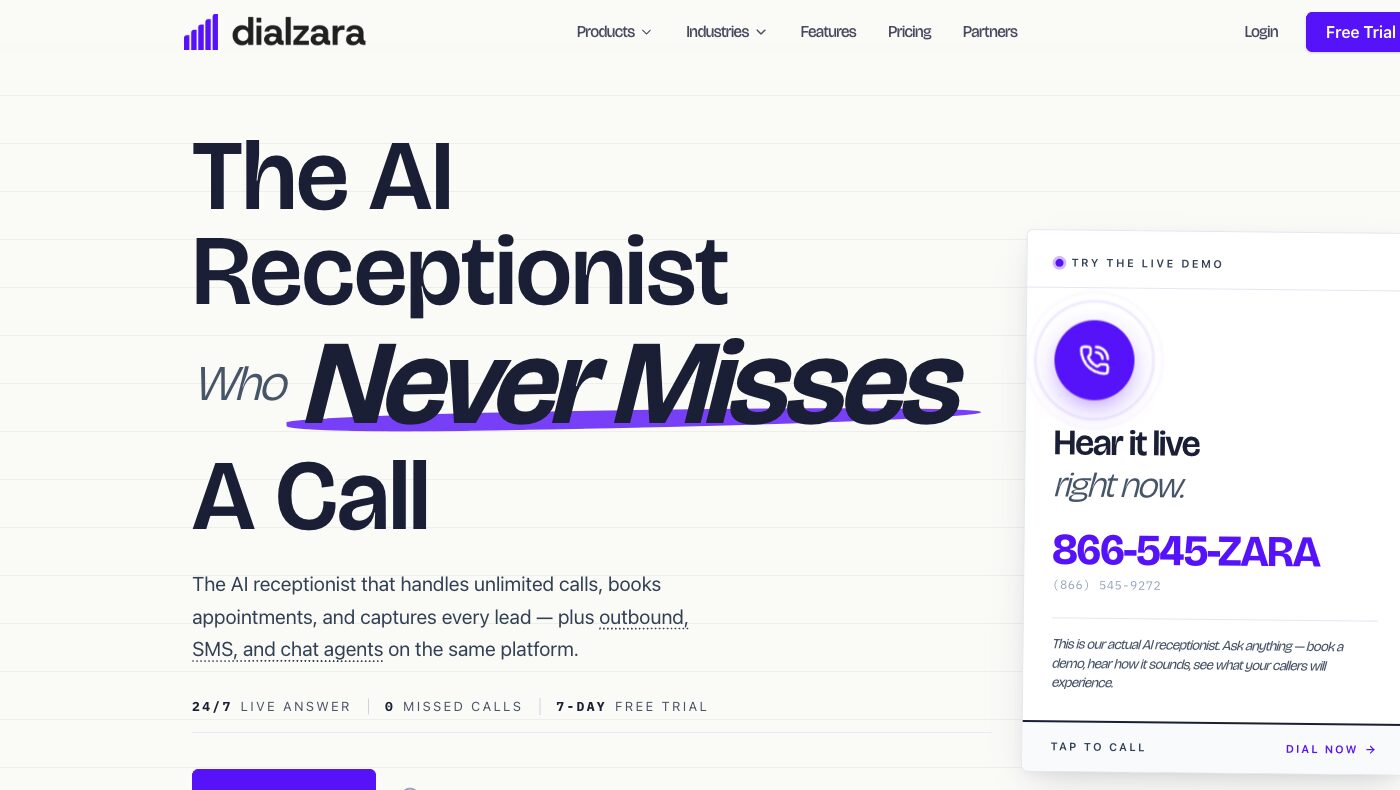
Dialzara: Best for Advanced Features
Best for: Businesses needing advanced customization and features
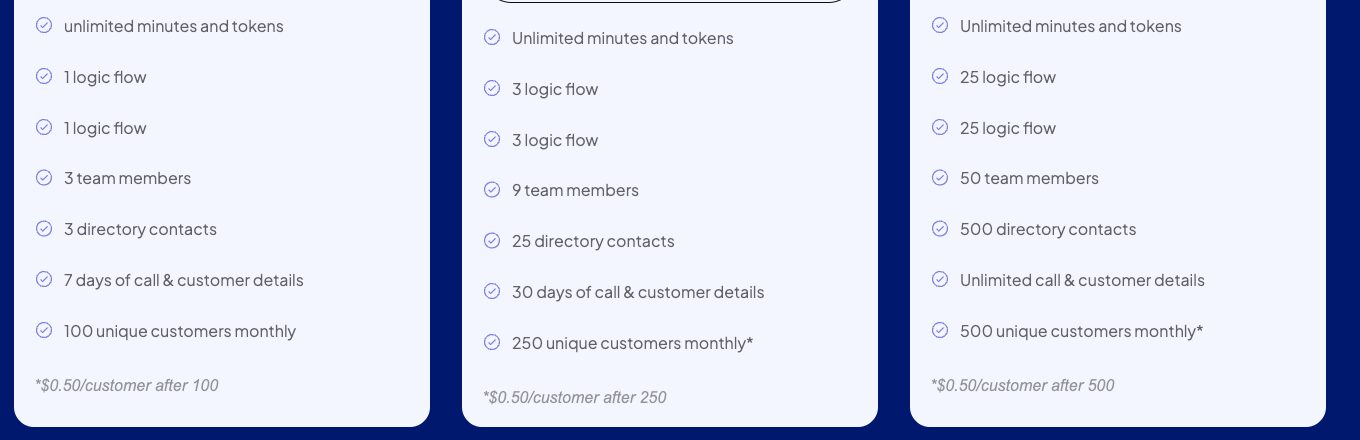
Pricing: $99-299/month based on features needed
Key Features:
- Multi-language support (20+ languages)
- Advanced call routing with complex rules
- Detailed analytics and reporting
- Custom AI training for industry terminology
- SMS and email follow-up automation
- Integration with major CRMs and phone systems
Pros:
- Highly customizable for complex workflows
- Powerful features for businesses with specific needs
- Multi-language support is excellent
- Good for businesses with complex call routing requirements
Cons:
- Steeper learning curve (more complex to set up)
- No human backup included (pure AI)
- Takes longer to implement than simpler platforms
- May be overkill for simple businesses
Best fit for: Businesses with complex call routing needs, multi-language customer base, or specific workflow requirements that simpler AI receptionists can't handle.
Real-world use case: A property management company serves English and Spanish-speaking tenants, needs complex routing (maintenance requests to one number, leasing to another, emergencies to on-call), and wants detailed reporting. Dialzara handles the complexity.
Abby Connect: Best Human Backup
Best for: Businesses prioritizing personal touch and human escalation
Pricing: Starting at $99/month
Key Features:
- AI receptionist with seamless escalation to live receptionists
- Team of 5-7 dedicated live agents as backup
- Bilingual support (English/Spanish)
- Appointment scheduling
- Custom intake forms for lead capture
- CRM integration
Pros:
- Excellent human backup (team of 5-7 live receptionists know your business)
- Seamless AI-to-human escalation
- Professional setup and training
- Good for businesses wanting "best of both worlds"
Cons:
- Per-call pricing can add up with high volume
- Higher cost than pure AI solutions
- May be more expensive during busy season
Best fit for: Businesses that want AI efficiency but worry about losing the personal touch. Good for professional services, medical offices, and businesses where customer experience is paramount.
Real-world use case: A dental practice uses Abby Connect's AI for simple calls ("What are your hours?" "Do you take my insurance?") but complex situations ("My tooth is killing me, can I get in today?") escalate immediately to a live receptionist who checks the schedule and books the appointment with empathy.
Synthflow: Best for Customization
Best for: Tech-savvy business owners who want to build custom solutions
Pricing: Starting at $29/month for unlimited AI assistants
Key Features:
- Build custom AI workflows and call scripts
- Unlimited AI assistants on most plans
- Developer-friendly with API access
- Integration with 5,000+ apps via Zapier
- Custom voice training
- Advanced automation possibilities
Pros:
- Very affordable ($29/month starting price)
- Highly customizable—you can build exactly what you need
- Unlimited AI assistants
- Great for tech-savvy users
- Developer-friendly
Cons:
- Requires more technical setup (not plug-and-play)
- Steeper learning curve
- No human backup
- Less hand-holding than premium platforms
Best fit for: Tech-savvy business owners who want maximum control and customization, or businesses with developers on staff who can build custom AI workflows.
Real-world use case: A web development agency wants an AI receptionist that not only answers calls but also collects specific technical information for each project type (website redesign vs. SEO vs. custom development). Synthflow lets them build custom intake forms and call flows for each scenario.
RingCentral AI: Best for Existing RingCentral Users
Best for: Businesses already using RingCentral phone system
Pricing: Included with RingCentral plans ($30-50/user/month)
Key Features:
- AI receptionist integrated with RingCentral phone system
- Call routing and forwarding
- Voicemail transcription
- Basic appointment scheduling
- Multi-device access (desktop, mobile)
- Team collaboration tools
Pros:
- No additional cost if you already use RingCentral
- Seamless integration with RingCentral features
- Part of broader business phone platform
- Good for teams needing unified communications
Cons:
- Requires RingCentral phone system (can't use standalone)
- Less advanced AI than dedicated AI receptionist platforms
- Limited customization compared to specialized AI platforms
- Not as feature-rich for receptionist tasks
Best fit for: Businesses already using RingCentral for their phone system who want basic AI receptionist features without paying for a separate platform.
Real-world use case: A 5-person marketing agency already pays $150/month for RingCentral ($30/user × 5). They turn on RingCentral's AI receptionist feature at no extra cost to handle after-hours calls and basic routing. It's not as sophisticated as NextPhone or Dialzara, but it's included in what they're already paying.
By 2025, research shows 85% of customer interactions will be managed without human agents. The businesses adopting AI now are capturing the leads their competitors are missing.
See NextPhone's hybrid AI+human model →
AI Receptionist Pricing and ROI
Let's talk money. Not theoretical savings, but real numbers.
What AI Receptionists Actually Cost
Here's the pricing reality for small businesses:
- Budget tier: $29-99/month
- Platforms: Synthflow ($29), My AI Front Desk ($79)
- What you get: Basic AI answering, appointment scheduling, simple routing
- Good for: Very small businesses (under 20 calls/month), testing AI for first time
- Limitations: No human backup, limited features, basic CRM integration
- Mid-range: $99-299/month
- Platforms: NextPhone ($199), Dialzara ($99-299), Abby Connect ($99+)
- What you get: Full-featured AI, calendar integration, CRM sync, emergency routing, spam filtering
- Good for: Most small businesses (20-100 calls/month)
- This is the sweet spot: Balance of features and cost
- Premium: $300-800/month
- Platforms: Smith.ai ($240+ based on volume), high-volume plans from other platforms
- What you get: AI + dedicated human backup, white-glove setup, premium support, advanced features
- Good for: Professional services, high-volume businesses (100+ calls/month), businesses prioritizing brand perception
The right tier depends on your call volume, complexity, and whether you need human backup.
Hidden Costs to Watch For
The advertised price isn't always what you'll pay. Watch for these costs:
Setup fees: Some platforms charge $100-500 for initial setup and training. NextPhone, My AI Front Desk, and Dialzara don't charge setup fees. Smith.ai includes professional setup in their monthly fee.
Overage charges: Platforms with per-call or per-minute pricing will hit you with overages if you exceed your plan. Ruby Receptionists, for example, charges $5.19 per call over your limit. That adds up fast.
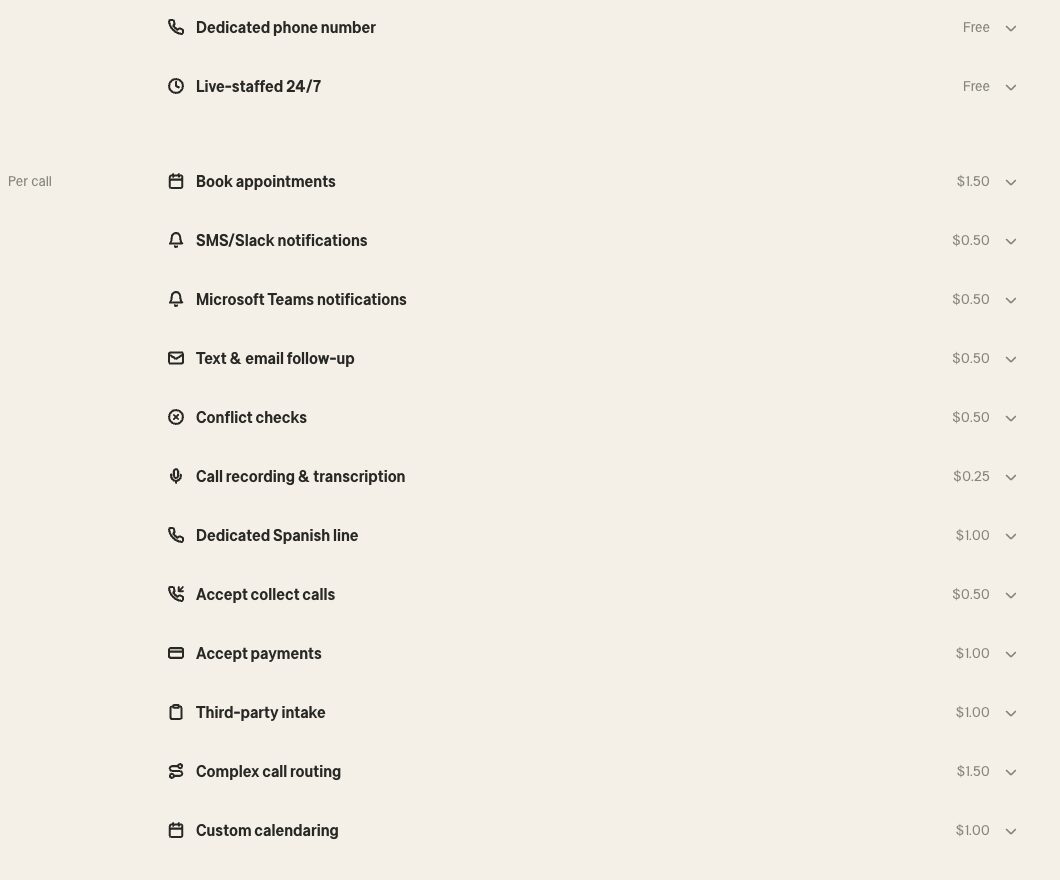
Integration costs: Some platforms charge extra to connect with your CRM or calendar. Verify integrations are included before signing up.
Training time investment: While not a dollar cost, expect to spend 2-4 hours initially training the AI on your business information, call scripts, and terminology. This is necessary to get the AI performing well.
Hidden reality check: Budget $0.20-0.30 per minute once you blend the base fee and any potential overage charges. If a platform advertises $99/month but charges $2/minute over 100 minutes, do the math on your actual call volume.
ROI Calculation: Is It Worth It?
Let's show you the exact math on three different scenarios.
Example 1: Average Home Services Contractor
Current state without AI:
- 42 calls/month (industry average)
- Industry research shows 60-80% missed; let's use 74.1%
- 31 calls going to voicemail every month
- Conservative 20% close rate (1 in 5 would hire you)
- $3,500 average project value (mix of repairs and installations)
- Lost revenue: $21,700/month = $260,400/year
With AI receptionist (NextPhone at $199/month):
- AI captures 90% of those 31 missed calls (28 calls)
- 28 calls × 20% close rate = 5.6 additional jobs
- 5.6 jobs × $3,500 = $19,600/month gained ($235,200/year)
- Cost: $199/month ($2,388/year)
- ROI: 9,750% return
Break-even analysis: You need to capture ONE additional $3,500 job to pay for 17 months of service.
Example 2: Small Operation (20 calls/month)
Current state:
- 20 calls/month
- 74.1% missed = 15 calls to voicemail
- 20% close rate
- $2,500 average project value (smaller jobs)
- Lost revenue: $7,500/month = $90,000/year
With AI receptionist (My AI Front Desk at $79/month):
- Capture 90% of missed calls (13 calls)
- 13 calls × 20% close = 2.6 jobs
- 2.6 jobs × $2,500 = $6,500/month gained ($78,000/year)
- Cost: $79/month ($948/year)
- ROI: 8,100% return
Even at low call volume with a budget AI receptionist, you're getting 81X return on investment.
Example 3: High-Volume Roofing Contractor
Current state:
- 87 calls/month (roofing contractors get higher volume)
- 76.6% missed (roofing data)
- 67 calls to voicemail
- 10.6% of all calls are quote requests (not just the missed ones)
- 9 quote requests going to voicemail monthly
- 20% close rate on quotes
- $15,000 average roof replacement
- Lost revenue: $27,000/month = $324,000/year
With AI receptionist (NextPhone at $199/month):
- Capture 90% of those 9 missed quote requests (8 quotes)
- 8 quotes × 20% close = 1.6 roofs/month
- 1.6 × $15,000 = $24,000/month gained ($288,000/year)
- Cost: $199/month ($2,388/year)
- ROI: 11,900% return
For high-ticket contractors, the ROI is even more ridiculous.
Comparing Costs: AI vs. Live Receptionist vs. Missed Calls
Let's put all the options side by side:
In-house receptionist:
- Salary: $35,000-37,000/year (Bureau of Labor Statistics median wage)
- Benefits: +25-40% ($8,750-14,800/year)
- Payroll taxes: ~7.65% ($2,750/year)
- Training/onboarding: $1,000-2,000
- Workspace/equipment: $500-1,000/year
- Total cost: $48,000-55,000/year ($4,000-4,600/month)
- Coverage: 9-5 Monday-Friday only
- Downside: Sick days, vacation time, managing an employee
Live answering service (Ruby Receptionists example):
- Base plan: $319/month + $5.19/call
- For 42 calls/month: $319 + $218 = $537/month ($6,444/year)
- For 87 calls/month (busy season): $319 + $452 = $771/month
- Coverage: 24/7 (for premium pricing)
- Downside: Per-call charges add up fast with volume
AI receptionist:
- Flat rate: $79-299/month
- Typical: $199/month = $2,388/year
- Coverage: 24/7/365 unlimited calls
- Downside: Less personal than humans (but hybrid models solve this)
Doing nothing (missed calls):
- Direct cost: $0/month
- Lost revenue: $21,700/month average = $260,400/year
- Opportunity cost: Incalculable (reputation damage, customer frustration, market share loss)
The math is clear: AI costs 85-95% less than human receptionists while providing better coverage (24/7 vs. 9-5), and the cost is a rounding error compared to what you're losing to missed calls.
Research shows businesses using AI save $250,000+ over 5 years compared to hiring full-time staff. For small businesses, many recover the cost of their AI receptionist by capturing just one additional appointment.
How to Choose the Right AI Receptionist for Your Business
You've seen the options. Now how do you decide?
Assess Your Call Volume and Patterns
Start here: How many calls do you actually get per month?
Under 20 calls/month:
- Go with a budget option (My AI Front Desk at $79/mo)
- You don't need advanced features
- Even at low volume, the ROI justifies AI over missed calls
- Exception: If most calls are after-hours, AI is essential regardless of volume
20-50 calls/month:
- Mid-range with solid features (NextPhone $199, Dialzara $99-299, Abby Connect $99+)
- You need good calendar integration and CRM sync
- Emergency routing and spam filtering become valuable
- Consider hybrid model if calls are complex or emotional
50+ calls/month:
- Premium or full-featured platform is worth the investment
- You're definitely losing significant revenue to missed calls
- Advanced features (analytics, reporting, human backup) pay for themselves
- The math absolutely justifies $199-299/month
What about after-hours volume?
Look at when your missed calls happen. If 30%+ of your calls are evenings, weekends, or outside business hours, AI is non-negotiable. You can't hire a part-time receptionist for 6 PM-9 PM and weekends. AI is the only realistic option.
Match Features to Your Needs
Different industries have different must-haves.
Emergency services (plumber, HVAC, electrician): NEED: Emergency detection and smart routing (15.9% of calls contain urgency language) NEED: 24/7 availability (emergencies don't follow business hours) NICE TO HAVE: Human backup for complex emergency assessment Best fit: NextPhone, Dialzara
Appointment-heavy businesses (landscaping, cleaning, pool service): NEED: Calendar integration and automatic scheduling (7.7% of calls are appointment requests) NEED: Reminder capabilities (reduce no-shows) NICE TO HAVE: Payment collection for booking deposits Best fit: My AI Front Desk, NextPhone, Abby Connect
High spam volume (electricians get 15.5% spam rate): NEED: Spam filtering (electricians' numbers end up on spam lists)
- Saves 6-7 spam interruptions per month at 42 calls/month
- Reclaims 15-20 minutes monthly Best fit: NextPhone, Dialzara
Complex consultations (legal, medical, high-ticket B2B): NEED: Human backup hybrid model (pure AI won't cut it) NEED: Custom intake forms for detailed information gathering NICE TO HAVE: CRM integration to track complex sales cycles Best fit: Smith.ai, Abby Connect, NextPhone
Multi-language customer base: NEED: Multi-language support MUST VERIFY: Quality of language support (some AI sounds natural in English but robotic in Spanish) Best fit: Dialzara (20+ languages), Abby Connect (English/Spanish)
Consider Your Budget and Expected ROI
Don't just look at the monthly cost. Calculate the ROI.
If you're missing 30 calls/month at 20% close rate with $3,500 average project value, you're losing $21,000/month. In that scenario, even a $299/month AI receptionist gives you a 7,000% ROI.
The real question isn't "Can I afford $199/month?" It's "Can I afford to keep losing $21,000/month?"
Budget considerations:
- Under 20 calls/month with simple questions: $79/mo option makes sense
- 20-50 calls/month with some complexity: $99-199/mo mid-range is sweet spot
- 50+ calls/month or complex needs: $200-300/mo premium platforms are justified
- Professional services where brand matters: $240+ for Smith.ai's established reliability may be worth it
Free trials matter: Take the 14-day trials seriously. Run real call volume through the system. Test edge cases. See if the AI handles your specific terminology. Better to discover limitations during the trial than after you've committed.
What to Expect in the First 30 Days
Setting realistic expectations prevents frustration.
- Week 1: Initial Setup (2-4 hours of your time)
- Enter business information (hours, pricing, service area)
- Write or customize call scripts
- Connect calendar (Google Calendar, Outlook)
- Set up CRM integration
- Record custom greeting if needed
- Test with practice calls
- Week 2: Training and Refinement
- Monitor real calls (most platforms let you listen to recordings)
- Identify questions the AI struggles with
- Add training for industry-specific terminology
- Adjust call routing rules based on actual patterns
- Fine-tune when AI should route to you vs. handle independently
- Week 3: Monitoring and Adjusting
- Review call logs and analytics
- Identify patterns: What types of calls come in most?
- Adjust scripts for common scenarios
- Add FAQ answers for repetitive questions
- Optimize appointment booking flow based on what you're seeing
- Week 4: Optimization
- AI should be handling 60-80% of calls smoothly by now
- You've identified the 20-40% that need human intervention
- Call routing is tuned to your business
- You're comfortable with the system and trust it
Realistic timeline: Fully optimized in 30-45 days, not instant perfection. The first week will feel clunky as you're still training the system. By week 3-4, it should feel natural and you'll wonder how you operated without it.
Industry research shows setup typically takes a few hours, not months. Don't expect to spend weeks configuring. But do expect some refinement period.
Try NextPhone free for 14 days →
When You SHOULDN'T Use an AI Receptionist
Let's be honest about limitations. AI isn't right for every business.
Businesses Where AI Isn't the Right Fit
Very low call volume (under 10 calls/month): If you're only getting 10 calls monthly, and you can answer most of them, the ROI calculation changes. At 74.1% missed (7-8 calls), even with perfect capture you're only gaining a few calls. Unless those calls are extremely high-value ($10K+ projects) or after-hours is critical, just answer your phone.
Exception: If half your calls are after-hours, AI still makes sense even at low volume.
Highly consultative businesses where every call is unique and complex: If you're a high-end architect doing custom $2M home designs, or an executive coach where every call requires deep personalized conversation, AI won't cut it. These aren't "What are your hours?" calls—they're exploratory conversations requiring expertise, relationship building, and reading nuance.
For these businesses, hire a skilled human receptionist or virtual assistant.
Extremely high-ticket sales requiring relationship building: Selling $50K-250K+ projects? The initial call is relationship-building, not information exchange. Customers expect to talk to a human. While AI can handle the "tire kickers" and route serious prospects to you, pure AI answering might hurt your brand.
Consider: Hybrid model where AI handles after-hours and basic screening, but during business hours, you or a human answers.
Industries where "white glove" personal service is the brand: If your entire value proposition is "boutique personal service," having an AI answer might send the wrong message. High-end concierge services, luxury real estate, family law—these businesses sell personal attention. AI efficiency can work against brand perception.
Better option: Human receptionist or premium live service with humans (Smith.ai's live agent service, not AI).
Situations Where Human Touch Is Essential
AI achieves 85-95% accuracy for routine inquiries but struggles with nuanced situations. Here's when humans are necessary:
Emotional situations:
- Family law (divorce, custody)
- Funeral services
- Therapy and counseling
- Medical diagnoses (beyond appointment scheduling)
These require empathy, emotional intelligence, and reading subtle cues. AI doesn't have empathy.
Complex problem-solving requiring back-and-forth:
- Custom project consultations with many variables
- Troubleshooting complex technical issues
- Negotiating terms or pricing
- Sales conversations requiring adaptation to objections
AI handles scripted scenarios well. Unscripted? Humans win.
High-value relationship sales:
- Enterprise B2B sales
- Luxury real estate
- Executive services
- Anything where the relationship IS the product
Building trust and rapport matters more than efficiency in these scenarios.
The Better Alternatives
If AI isn't right for you, here are better options:
Very low volume (under 10 calls/month): Just answer your phone. Or use simple voicemail with prompt callback promises. The cost of an AI receptionist might not justify the minimal benefit.
Highly consultative businesses: Hire a part-time virtual assistant (human). Cost: $15-25/hour for 10-20 hours/month = $300-500/month. You get human judgment and relationship building.
White glove premium services:
- Full-time receptionist if volume justifies it ($4,000-4,600/month)
- Premium live answering service (Smith.ai's human service at $500-800/month)
Industries with complex compliance (legal, medical): Hybrid AI+human model (NextPhone, Smith.ai, Abby Connect) where AI handles basics but routes complex or sensitive calls to trained humans who understand compliance.
Honest Assessment Questions
Ask yourself:
1. Are most of my calls answering the same 10 questions?
- YES → AI works great
- NO → AI struggles, consider hybrid or human
2. Could a script handle 60-80% of my calls?
- YES → AI is perfect
- NO → AI will route most calls to you anyway
3. Do my calls require empathy and emotional intelligence?
- YES → Humans needed
- NO or RARELY → AI can handle it
4. Is every call completely unique and complex?
- YES → AI will struggle, go hybrid or human
- NO → AI handles predictable patterns well
5. Am I getting 20+ calls/month?
- YES → ROI justifies AI even with some limitations
- NO → Might not be worth it unless after-hours critical
6. Do I have after-hours or weekend emergency calls?
- YES → AI is the only realistic option (can't hire humans for 9 PM emergencies)
- NO → More flexibility in choosing solution
Be honest with yourself. If your gut says "my business is too unique for AI," you're probably right. But if you're a contractor, home services business, or professional service with predictable call patterns, AI works.
For businesses that don't fit AI: Explore live answering services →
How NextPhone Combines AI Efficiency with Human Backup
After reviewing seven platforms, here's how NextPhone approaches the AI receptionist challenge.
The NextPhone Hybrid Approach
NextPhone doesn't force you to choose between AI and humans. You get both.
AI answers every call in under 5 seconds. No rings going to voicemail. No "I'll call you back later" situations. Instant answer, 24/7.
For routine questions, AI handles it completely:
- "What are your hours?" → Answered in 15 seconds
- "Do you service my area?" → AI checks zip code and confirms
- "Can you come Thursday at 2 PM?" → AI checks calendar and books appointment
- "What's your pricing for [standard service]?" → AI provides pricing from your rate sheet
This is 60-80% of calls for most home services businesses. The AI handles these faster and more reliably than a human receptionist would.
For urgent calls, AI detects and routes immediately: Customer says "My pipe burst and water is everywhere" or "AC emergency, 95 degrees." The AI detects urgency keywords and routes to your phone in seconds. You don't want these in voicemail—you want them now while the customer is still on the line.
For complex calls, AI routes to human backup: Questions the AI can't confidently answer ("I need a custom deck with specific materials" or "What's your warranty on roof repairs?") get routed to a human team member who can have that nuanced conversation.
You get AI speed and 24/7 coverage for the routine stuff, plus human judgment for the 20-40% of calls that need it.
Built Specifically for Home Services
Most AI receptionists are generic—built for any small business. NextPhone is tuned for contractors.
Understands contractor terminology: Knows the difference between a service call and an estimate. Recognizes trade-specific terms (HVAC tonnage, electrical panel upgrades, roofing squares). Asks relevant follow-up questions.
Emergency routing tuned for trades: The AI knows that "water heater leaking" is urgent for plumbers, "no cooling" is urgent for HVAC, "electrical sparking" is urgent for electricians. It doesn't treat all calls equally—it prioritizes based on trade-specific urgency patterns.
Integrates with home services tools: Direct connections to Jobber, ServiceTitan, Housecall Pro—the software contractors actually use. Not just generic CRMs, but the platforms purpose-built for field service businesses.
Call patterns trained on real contractor data: NextPhone's AI learned from customer service patterns in home services, not retail or professional services. It knows contractors often can't answer because they're on a ladder, under a house, or driving between jobs—so the AI is designed to gather all needed information the first time instead of requiring callbacks.
Pricing and What's Included
$199/month flat rate, unlimited calls. No per-minute charges. No "first 100 calls then $X per call" surprises. You get unlimited call answering whether you get 20 calls or 200 calls in a month.
What's included:
- AI call answering (under 5 seconds)
- Human backup for complex calls
- Emergency detection and routing
- Spam call filtering (saves you from 7% spam calls)
- Calendar integration (Google Calendar, Outlook, Apple Calendar)
- Appointment scheduling and booking
- CRM integration (Jobber, ServiceTitan, HubSpot, Salesforce)
- Call summaries sent via text and email
- Call recording and analytics
- 14-day free trial (no credit card required to start)
No setup fees. No per-call charges. No hidden costs. The price is the price.
Why Contractors Choose NextPhone
Here's what contractors tell us:
"I can't answer my phone when I'm on a roof." An HVAC contractor on a ladder can't safely pull out his phone. A plumber under a sink with wet hands can't answer. An electrician in an attic in July can't hear his phone ring. NextPhone captures these calls automatically.
"I was losing calls and didn't even know it." Many contractors assume business is slow. Reality: Business isn't slow, you're just not answering. Customer service data shows contractors miss 60-80% of calls. NextPhone shows you exactly how many calls you're getting and captures the ones you'd miss.
"It costs less than one day's lost revenue." If you're losing $21,000/month to missed calls (average contractor scenario), NextPhone at $199/month costs less than 1% of what you're reclaiming. The ROI is absurd.
"The hybrid model gives me peace of mind." Pure AI is cheaper, but what about the complex calls? NextPhone's human backup means you don't worry about AI botching a $15,000 roof estimate. Routine calls go to AI, important calls go to humans.
Real-world example: An electrician gets a call at 9 PM. Customer asks "Do you do panel upgrades?" NextPhone's AI answers yes and asks for details. Customer says "I'm getting sparks from my panel." AI detects emergency, routes immediately to electrician's cell phone. He answers, assesses the situation, and schedules an emergency visit for $800. Without NextPhone, that call goes to voicemail and the customer calls the next electrician.
Try NextPhone free for 14 days →
Frequently Asked Questions About AI Receptionists
How accurate are AI receptionists?
Modern AI receptionists achieve 85-95% accuracy for routine inquiries like hours, pricing, and appointment scheduling. You're not going to get 100% accuracy—that's unrealistic even with human receptionists.
Accuracy depends heavily on training. The more you customize the AI to your specific business, the better it performs. If you spend 3 hours training it on your pricing, common questions, and terminology, you'll get 90%+ accuracy. If you do a 15-minute rushed setup, expect 70-80%.
Best systems route questions they're uncertain about to humans rather than guessing and potentially giving wrong information. That's why hybrid models (AI + human backup) work better than pure AI. The AI knows its limits.
Expect a 2-4 week refinement period as you train the AI on your terminology and common questions. It gets smarter over time.
Will customers know they're talking to AI?
Modern AI voices sound natural—not robotic like older systems. Platforms like Rosie AI and NextPhone use conversational AI with natural cadence and smooth handling of interruptions. It doesn't sound like the IVR phone tree from your bank in 2005.
For quick questions, most customers don't notice. "Are you open Saturday?" gets answered in 15 seconds and the customer is satisfied. They got their answer fast.
For longer conversations, yes, some customers will realize it's AI. It's not perfect at mimicking human conversation for 5+ minutes. There are tells—slightly mechanical phrasing, inability to banter or go off-script.
The hybrid approach solves this: AI handles routine questions (60-80% of calls) where speed matters more than warmth. Complex or sensitive calls transfer to humans where personal touch matters.
Does it hurt your business if customers know? Not usually. Most customers care more about fast answers than whether it's human or AI. But if your brand is built on "white glove personal service," consider NextPhone's hybrid AI+human model where important calls get routed to real people.
What happens if the AI doesn't understand a question?
Quality AI receptionists are programmed to recognize when they're uncertain and route the call to a human or take a detailed message.
You can set escalation rules. Example: "If caller asks about custom deck designs, route to my cell phone" or "If AI confidence is below 70%, take a message with contact info and I'll call back."
The AI learns from these situations. Most platforms let you review call logs and add training for questions it struggled with. Customer asks about warranty policy and AI doesn't have that info? You add it to the knowledge base. Next time, AI handles it smoothly.
This is why hybrid models (AI + human backup) work better than pure AI. Pure AI platforms (My AI Front Desk, Synthflow) have to guess or take a message. Hybrid platforms (NextPhone, Smith.ai, Abby Connect) route uncertain calls to humans who can actually answer.
Realistically, expect 5-10% of calls to be outside the AI's ability to handle in the first month. By month 2-3, that drops to 2-5% as you've trained it on edge cases.
How much does an AI receptionist cost for a small business?
Budget options start at $29-79/month (Synthflow at $29, My AI Front Desk at $79) for basic features. Good for very small businesses under 20 calls/month testing AI for the first time.
Mid-range options are $99-299/month (NextPhone at $199, Dialzara $99-299, Abby Connect $99+). This is the sweet spot for most small businesses getting 20-100 calls/month. You get full features, calendar integration, CRM sync, emergency routing, and spam filtering.
Premium options with human backup run $300-800/month (Smith.ai starting at $240 but scaling with volume).
Compare this to alternatives: Human receptionist: $3,100-4,300/month (salary + benefits + payroll taxes) Traditional live answering service: $500-800/month for just 100 calls AI receptionist: $79-299/month for unlimited calls
AI costs 85-95% less than human receptionists while providing better coverage (24/7 vs. 9-5).
For most small businesses, the $99-199/month range is the right choice. See NextPhone pricing →
Can AI receptionists schedule appointments in my calendar?
Yes, this is one of the core features. Customer service patterns show 7.7% of calls are scheduling requests—automating this alone saves hours per week.
AI receptionists connect to Google Calendar, Outlook, Apple Calendar, or scheduling tools like Calendly and Acuity. They check your availability in real-time and book appointments directly.
Here's how it works: Customer calls and says "Can I schedule an AC tune-up for Thursday afternoon?" AI checks your calendar, sees you're free at 2 PM and 4 PM, offers both slots, customer picks 2 PM. AI books it and sends confirmation to both of you with all details.
You receive:
- Calendar appointment (auto-synced to your Google/Outlook calendar)
- Text message or email with customer name, phone, service requested, time
- Option to confirm or reschedule if needed
Some platforms also handle:
- Appointment reminders (reduce no-shows)
- Rescheduling requests
- Booking deposits via payment integration
Calendar integration is table stakes for any decent AI receptionist. If a platform doesn't offer it, skip that platform.
What industries benefit most from AI receptionists?
Home services industries see the biggest impact: plumbing, HVAC, electrical, roofing, landscaping, general contractors, painting, pool service, pest control, cleaning services.
Why? These businesses have: High call volume: Average 42 calls/month, with busy contractors getting 80-100+ Time-sensitive inquiries: Emergencies and "need it today" calls that can't wait Staff who can't always answer: On job sites, on ladders, under houses, driving between jobs Predictable call patterns: Most calls are "What are your rates?" "Can you come Thursday?" "Do you service my area?"—perfect for AI
Industry research shows these businesses miss 60-80% of calls. For a roofer missing 76.6% of calls at $15,000 average project, every captured call is massive ROI.
Also works great for: Medical and dental offices: High appointment volume, after-hours calls Legal services: Initial intake, appointment scheduling (though complex legal questions need humans) Real estate: Lead capture, showing scheduling Property management: Maintenance requests, tenant inquiries
Common thread: Businesses where missing a call = lost revenue and calls follow predictable patterns. AI receptionist for contractors → is particularly effective because contractor call patterns are consistent.
Do I need to replace my existing phone system?
No. Most AI receptionists work with your existing phone number and system.
Setup is simple: Forward your existing business number to the AI receptionist number. Takes 5 minutes in your phone system settings.
You keep the same business phone number customers know. Behind the scenes, calls route to the AI, but your customers dial the same number they've always called.
AI receptionists typically integrate with:
- Any VoIP provider (RingCentral, Nextiva, Vonage, Grasshopper, etc.)
- Traditional landlines via call forwarding
- Mobile phones (forward your cell to the AI)
No expensive equipment to buy. No phone system replacement. No new number to advertise. It works with what you have.
Exception: RingCentral's AI Receptionist only works if you use RingCentral for your phone system. But standalone platforms (NextPhone, My AI Front Desk, Dialzara, Smith.ai, Abby Connect) work with any phone setup.
Choose the AI Receptionist That Fits Your Business
AI receptionists have evolved beyond robotic voices to natural-sounding assistants that can handle 60-80% of small business calls. For home services contractors missing 60-80% of calls (industry average), even a budget AI receptionist delivers 50X+ ROI by capturing leads you're currently losing to competitors.
The best choice depends on your call volume, budget, and whether you need human backup. But for most small businesses getting 30+ calls/month, the investment pays for itself with just one captured job.
Don't let another $21,000/month in potential revenue go to voicemail. The contractors winning in 2025 aren't the ones with the biggest marketing budgets—they're the ones answering every single call.
**Ready to Stop Missing Customer Calls?
Try NextPhone's AI receptionist free for 7 days. See how other small businesses are capturing more leads 24/7.
Get Started
About the Author
This guide was researched and written by the NextPhone team, who analyzed customer service patterns from thousands of small business calls to understand what makes AI receptionists effective for contractors and home services businesses.
Related Articles
How AI Receptionist Works: Complete Technology Guide
Deep dive into the technology behind AI receptionists—natural language processing, intent detection, and call routing logic explained in plain English.
AI Receptionist Pricing Guide: What You'll Actually Pay in 2025
Complete breakdown of AI receptionist costs, from budget platforms to premium services, with hidden fees to watch for and ROI calculations.
AI Receptionist for Contractors: Why Home Services Need AI
Industry-specific guide for plumbers, HVAC techs, electricians, and general contractors on how AI captures the 60-80% of calls you're currently missing.