Why GoHighLevel Users Look for Voice AI Alternatives
GoHighLevel is excellent at what it does best: CRM, funnels, email/SMS campaigns, workflow automation. If you're running an agency or small business on GHL, you probably don't want to leave. You just want inbound calls that don't make your callers cringe.
The GHL community has been vocal about this. Here are the top-voted complaints from ideas.gohighlevel.com:
| Issue | Community Upvotes | What Happens |
|---|---|---|
| Push-to-talk website widget wanted | 236 | Not available at all |
| Robotic voice quality | 178 | Choppy, unnatural, especially bad in Spanish |
| No caller recognition | 174 | Can't personalize greetings for known contacts |
| No spam call blocking | 91 | Spam callers create fake contacts and trigger workflows |
| No call recording in follow-ups | 89 | Summaries never get emailed to business owners |
| Mandatory AI disclaimer on outbound | 41 | Leads hang up when they hear "AI Assistant" |
| No appointment rescheduling | 13 | Can only book new appointments, not modify existing ones |
These aren't edge cases. A robotic voice with 178 upvotes means hundreds of agency owners and their clients are hearing the same thing: calls that sound off, feel scripted, and push prospects to hang up.
The spam problem is especially damaging. Without filtering, every robocall creates a fake contact in your CRM and can trigger automations, messing up your data and wasting workflow credits.
This post is about keeping GoHighLevel and upgrading the one part that's underperforming: the voice layer.
The short answer: NextPhone is the plug-and-play fix most GHL agencies and SMBs land on. Forward your GHL number to NextPhone and every inbound call gets answered in under 2 seconds by natural conversational AI, with spam filtering, emergency routing, and call data flowing straight back to your GHL CRM via webhook. No porting numbers. No changing workflows. Setup takes about 5 minutes.
Already using GoHighLevel? See how NextPhone works alongside it.
GHL Voice AI: What It Does and What It Actually Costs
GHL's Voice AI (part of the "AI Employee" suite) handles inbound calls, answers FAQs, and can book appointments through your GHL calendar. It works inside your existing GHL sub-account, which means no external setup, a genuine advantage for simplicity.
Here's the pricing breakdown from GHL's support documentation:
- Pay-per-use: $0.045/minute Voice Engine + text-to-speech (from $0.015/minute) + LLM tokens, with phone charges billed separately (the bundled rate changed on May 20, 2026)
- AI Employee Growth: $50/month per location, with 100 Voice AI minutes, then pay-per-use rates
- Unlimited plan: $97/month per location; unlimited Voice AI (inbound, outbound and widget) plus the other AI Employee tools, subject to fair use
GoHighLevel prices read on its AI pricing help article in October 2026.
For agencies running multiple client sub-accounts, that $97 multiplies fast. Ten clients = $970/month just for AI Employee access, before you factor in quality limitations.
At low volume, GHL's pay-per-use pricing is genuinely cheap. A business taking 50 calls per month at 3 minutes average pays about $9 in Voice Engine and TTS charges (150 minutes at $0.045 plus $0.015), plus LLM tokens and phone charges. Hard to beat at that volume.
But "cheap" stops mattering when the voice quality drives callers away or spam contacts pollute your CRM.
What to Look for in a GoHighLevel Alternative for Phone Answering
Before comparing specific tools, here's what matters when picking a voice AI that works alongside GoHighLevel:
- Call forwarding compatibility: It should work by forwarding calls from your GHL number. No need to port numbers or abandon GHL telephony.
- Natural-sounding voice: Not choppy text-to-speech. Callers should feel like they're talking to a person, not a robot.
- Appointment booking AND rescheduling: GHL's voice AI only books. You need one that also modifies and cancels.
- 24/7 coverage: The whole point. After-hours calls, evening emergencies, and weekend inquiries are exactly the high-intent leads most likely to call a competitor if they hit voicemail.
- Spam filtering: Block robocalls before they create fake CRM contacts.
- Predictable pricing: Flat-rate or transparent per-minute. No surprise overages.
- CRM integration: Webhooks or API access to push call data back into GHL or any other CRM.
For a deeper breakdown of what separates good AI receptionists from bad ones, see our guide to AI receptionist features.
NextPhone: The Recommended GoHighLevel Voice AI Alternative
Below is the full breakdown. We start with NextPhone (the plug-and-play option built specifically for GHL agencies and SMBs), then cover four developer-grade alternatives for teams with specific technical requirements. Every tool below handles inbound calls and works alongside GoHighLevel via call forwarding.
NextPhone: Plug-and-Play GHL Voice AI (Recommended)
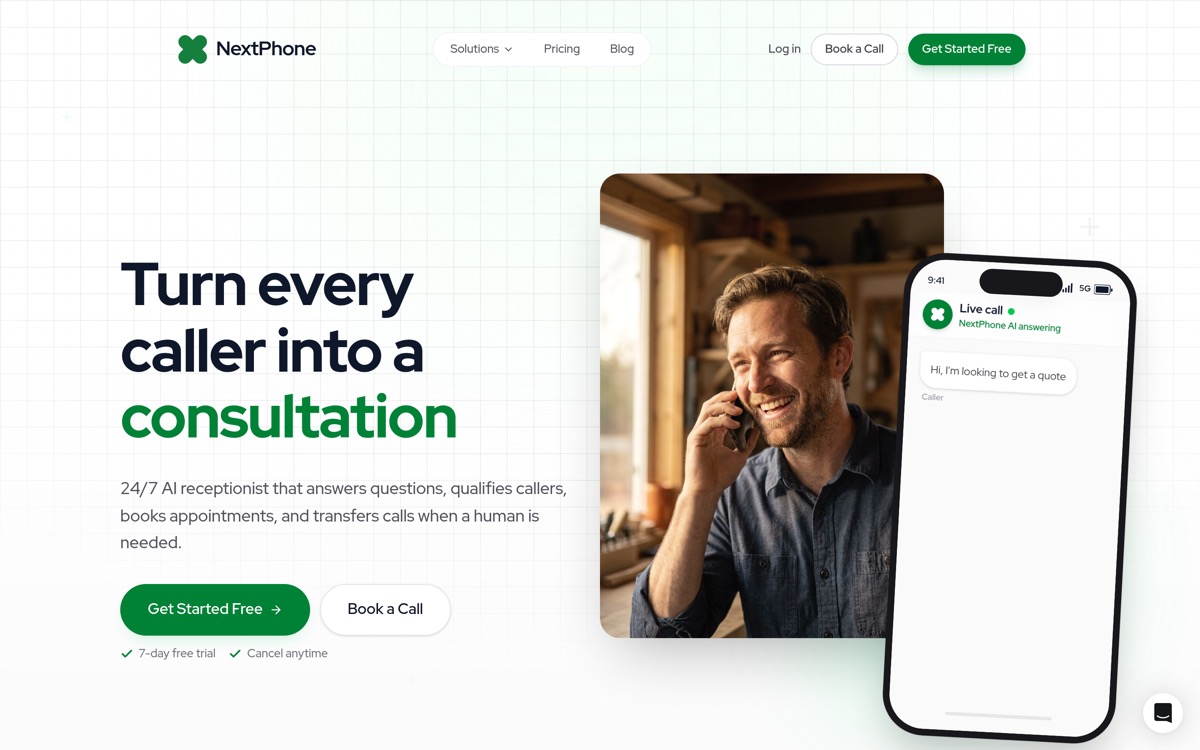
NextPhone is a dedicated AI receptionist built for small businesses and agencies. It answers every inbound call in under 2 seconds, handles routine questions (hours, pricing, scheduling), and routes urgent calls to your phone through smart forwarding.
Pricing: Flat monthly plans from $199: unlimited calls, no per-minute charges, no overage fees. CRM integrations like GoHighLevel start on the $299 Growth plan.
GoHighLevel Voice AI vs. NextPhone: the key differences:
Prices checked against each provider's own pricing page on October 5, 2026.
| GoHighLevel Voice AI | NextPhone | |
|---|---|---|
| Monthly cost | $0.045/min + TTS + tokens, or $97/mo per location | Flat monthly plans from $199 |
| Unlimited calls | On $97/mo plan | Yes, every plan |
| Per-SMS charges | Yes (even on unlimited) | No, SMS included |
| Spam blocking | No (91-upvote community request) | Built-in |
| Languages | Limited | 14 (incl. Spanish, Mandarin, French) |
| Emergency routing | No | Keyword-triggered instant transfer |
| Setup | Built into GHL sub-account | About 5 minutes via call forwarding |
The core difference in approach: GoHighLevel is a full CRM and marketing platform with phone AI added as one feature. NextPhone is phone-first, designed from the ground up for inbound call handling, with no additional CRM complexity to manage. If you just want better calls without rebuilding your stack, that distinction matters.
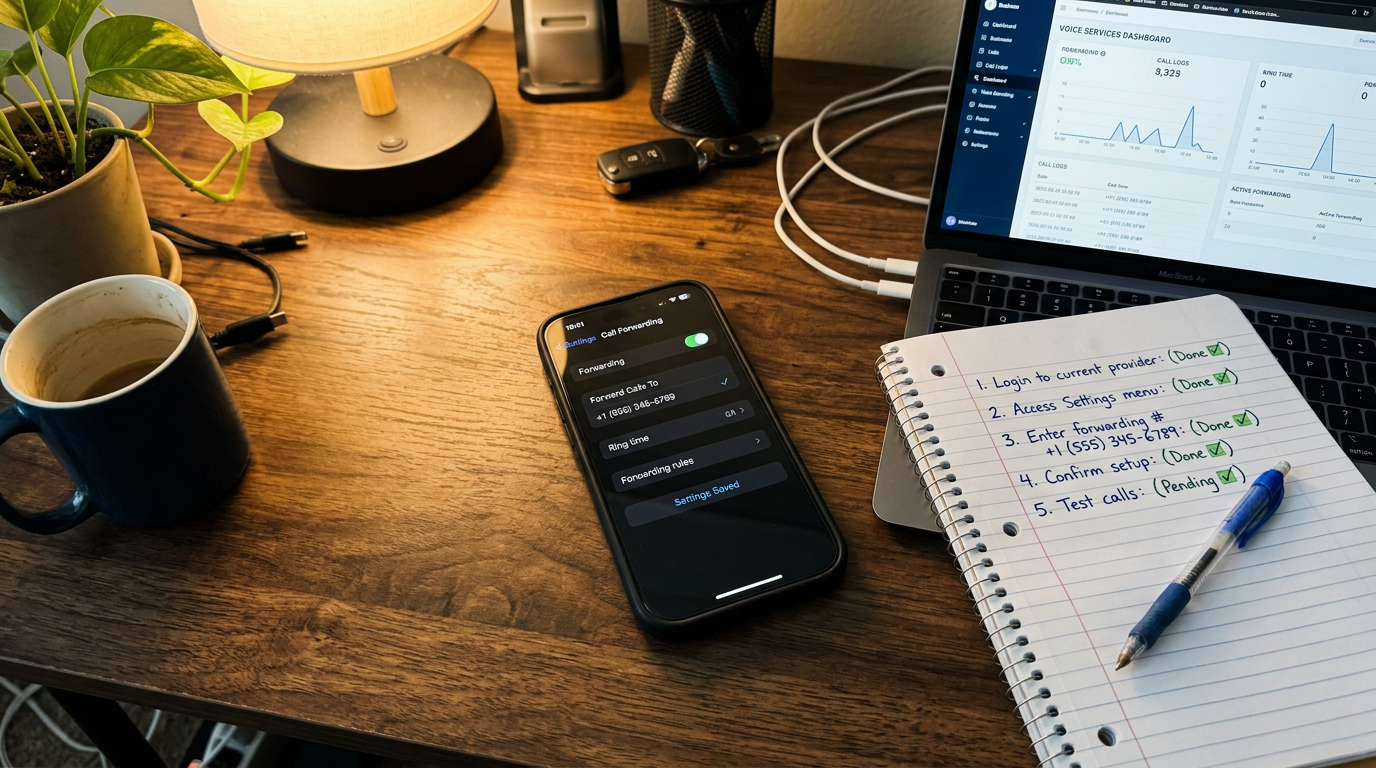
How it works with GHL: Forward calls from your GHL number to NextPhone. The AI handles inbound calls, and call data flows back to your CRM via HTTP webhooks. Your GHL funnels, workflows, and automations keep running unchanged. We wrote a full walkthrough: how to integrate NextPhone with GoHighLevel.
What stands out:
- 14 languages: Handles each call in the caller's preferred language automatically. GHL's voice AI struggles with Spanish; NextPhone supports Mandarin, Vietnamese, Korean, Arabic, French, and more.
- Emergency keyword routing: Detects words like "pipe burst," "no power," or "flooding" and routes those calls to your phone instantly. Based on our analysis of 1,446,980 inbound calls, urgent and emergency calls rank among the most frequent inbound scenarios, and they command premium pricing when captured immediately rather than sent to voicemail.
- Spam filtering: Blocks robocalls before they reach your CRM. No fake contact creation, no wasted workflow triggers.
- Smart forwarding: AI resolves 90-95% of calls. The remaining 5-10% get forwarded to your phone with full context. Without AI, those calls just hit voicemail.
Limitations: Higher monthly cost than entry-level alternatives. No free tier, but the 7-day free trial lets you test before committing.
Best for: GHL agencies and SMBs who want a plug-and-play voice AI replacement with flat-rate pricing, no metering, and zero technical setup.
Agency owner scenario: An agency managing GHL sub-accounts for multiple home services clients can forward each client's GHL phone number to NextPhone. Setup per client: about 5 minutes. The AI then handles all inbound calls for every client (capturing leads, booking appointments, routing emergency calls) while call data flows back into each GHL CRM via webhook.
Four More GoHighLevel Voice AI Options
Phonely
Phonely is an AI phone agent platform with a free plan, pitched at businesses from a single location up to large teams. You build the agent yourself in its AI Builder and pay for a monthly minute allowance.
Pricing: Per-minute allowances (read on Phonely's own pricing page, October 5, 2026):
- Free: free for 100 minutes (about 50 calls, by Phonely's estimate), email and SMS notifications
- Starter: $50/month for 200 minutes, then $0.25 to $0.35 a minute; transcripts, AI analytics and spam filtering
- Professional: $150/month for 650 minutes, then $0.30 a minute; CRM integrations and API integrations
Phonely's plan cards and its own comparison table disagree on Starter (200 vs 250 minutes, $0.25 vs $0.35 overage); the figures above are the plan cards.
How it works with GHL: Forward calls from your GHL number. CRM and API integrations are listed on the Professional plan; the pricing page does not name GoHighLevel, so confirm the connection before you buy.
What stands out: A real free plan to test on, and every paid plan publishes its minute allowance and its overage rate. The entry price is genuinely affordable.
Limitations: Minute allowances create overage anxiety during seasonal spikes. CRM integrations start on the Professional plan ($150/month for 650 minutes). Appointment booking is not stated on the pricing page.
Best for: Solo operators with low call volume who want to try simple AI answering before paying anything.
Synthflow
Synthflow is an API-first voice AI platform designed for building custom voice agents. It's aimed at developers and agencies who want to create white-label voice solutions.
Pricing: Synthflow is quote only: its pricing page now lists enterprise contracts only, starting at $30,000 a year, with no self-serve plan (read October 5, 2026).
How it works with GHL: API integration is possible but requires technical setup. Not a point-and-click connection.
What stands out: Strong API, white-label capability for agencies reselling voice AI, and workflow builder for complex call logic. Good fit if you're building a productized service on top of voice AI.
Limitations: No self-serve plan: pricing starts with a sales conversation and an annual enterprise contract. Requires technical skills to configure. Not plug-and-play.
Best for: Technical agencies building custom or white-label voice AI products. Not a fit for business owners who just want their phone answered.
Bland AI
Bland AI is a developer-focused platform for building custom AI phone agents with full control over conversation logic, voice, and behavior.
Pricing: Per-minute, with an optional subscription (read October 5, 2026):
- Start: no platform fee, $0.14/min talk time
- Build: $299/mo platform fee + $0.12/min
- Enterprise: custom
Additional charges: transferred-call time at $0.04 to $0.05/min; telephony billed separately.
How it works with GHL: API-based integration only. Requires development resources to connect.
What stands out: Maximum flexibility. You control the conversation flow, voice characteristics, and agent behavior at a granular level. If you have a specific use case that off-the-shelf products can't handle, Bland gives you the building blocks.
Limitations: Requires coding. This is not a product you sign up for and start receiving calls. The layered billing (per-minute talk time + transfer time + telephony, plus a platform fee on Build) makes cost prediction difficult. Monthly bills can climb past the subscription base quickly at volume.
Best for: Development teams building bespoke voice agents with specific behavioral requirements. Not suited for non-technical business owners.
Retell AI
Retell AI is a programmable voice agent platform with built-in appointment handling capabilities. It offers granular control over the voice stack with component-based pricing.
Pricing: Pay-as-you-go with component pricing:
- Voice infrastructure: $0.055/min
- Voices (TTS): $0.015-$0.040/min
- LLM costs: from under $0.01 to $0.32/min, by model
- Total: $0.07 to $0.31 a minute for AI voice agents, per Retell's pricing page (read October 5, 2026)
Additional: Concurrency slots at $8/mo each (beyond ~20 free), knowledge bases at $8/mo each, verified phone numbers up to $100/mo.
How it works with GHL: API-based. Can receive forwarded calls from GHL numbers with technical setup.
What stands out: Component-based architecture means you can optimize each piece (voice quality, LLM intelligence, telephony) independently. Good appointment handling workflows. Active developer community.
Limitations: Pricing is hard to predict because it depends on which voice model, LLM, and features you use. Better voice quality = higher per-minute cost. Requires development work to deploy. Enterprise-level usage (10,000 min/mo) can reach $1,200-$1,800/month.
Best for: Technical teams building sophisticated multi-step voice agents where appointment scheduling is a core workflow.