Last updated: June 2026.
Quick answer: Most people searching for a Phone.com alternative want one of two things: a cheaper or simpler VoIP line, or a way to stop bleeding leads to voicemail. Those are different problems. If you want a different phone system, Google Voice, Quo (formerly OpenPhone), or Grasshopper are the honest picks. If your real issue is calls going unanswered while you're on a job, in a meeting, or asleep, the fix is an AI receptionist that answers, qualifies the caller, and captures the lead live. NextPhone does that on flat monthly plans from $199, unlimited inbound calls. This guide compares 8 Phone.com alternatives on real pricing and what each one actually does when the phone rings.
Disclosure: NextPhone is our product: an AI receptionist that answers calls for small businesses. We've put it alongside the VoIP and live-answering options so you can compare on the same terms, and we've kept the honest pros and cons for every alternative.
Why People Look for a Phone.com Alternative
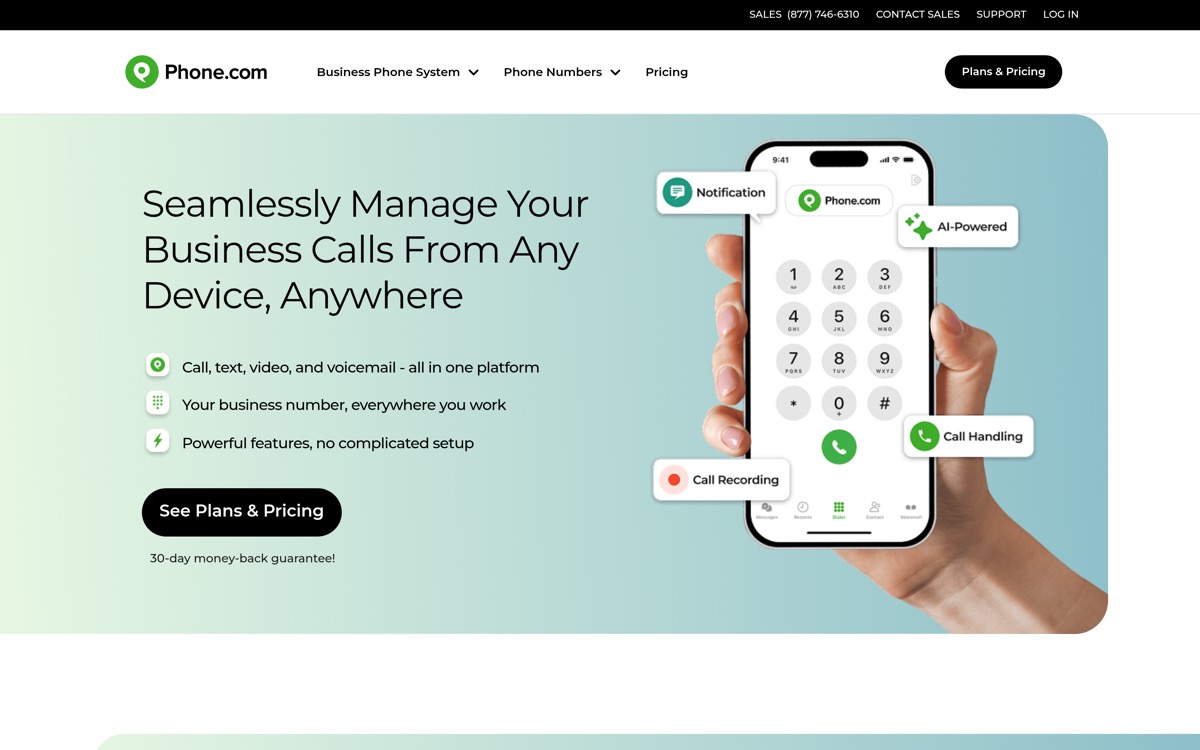
Phone.com is a budget VoIP provider. It's been around since 2007, and the appeal is obvious: a real business phone number, call forwarding, voicemail, and an auto-attendant for about $18 per user per month on the entry plan ($15/user/mo on an annual plan). For a solo operator who just wants to stop handing out a personal cell number, it does the job.
The friction shows up in two places.
The first is the plan structure. Phone.com's cheapest tier meters your minutes: the base plan includes a pool of minutes, and heavy callers get bumped toward the unlimited tier at a higher per-seat price. That's fine if your call volume is predictable. It's annoying if it isn't.
The second (and the one that actually costs you money) is what happens when nobody picks up. Phone.com is a phone system. It routes calls. When you can't answer, it does what every VoIP does: sends the caller to voicemail. And that's where the leads die.
The Voicemail Problem Phone.com Doesn't Solve
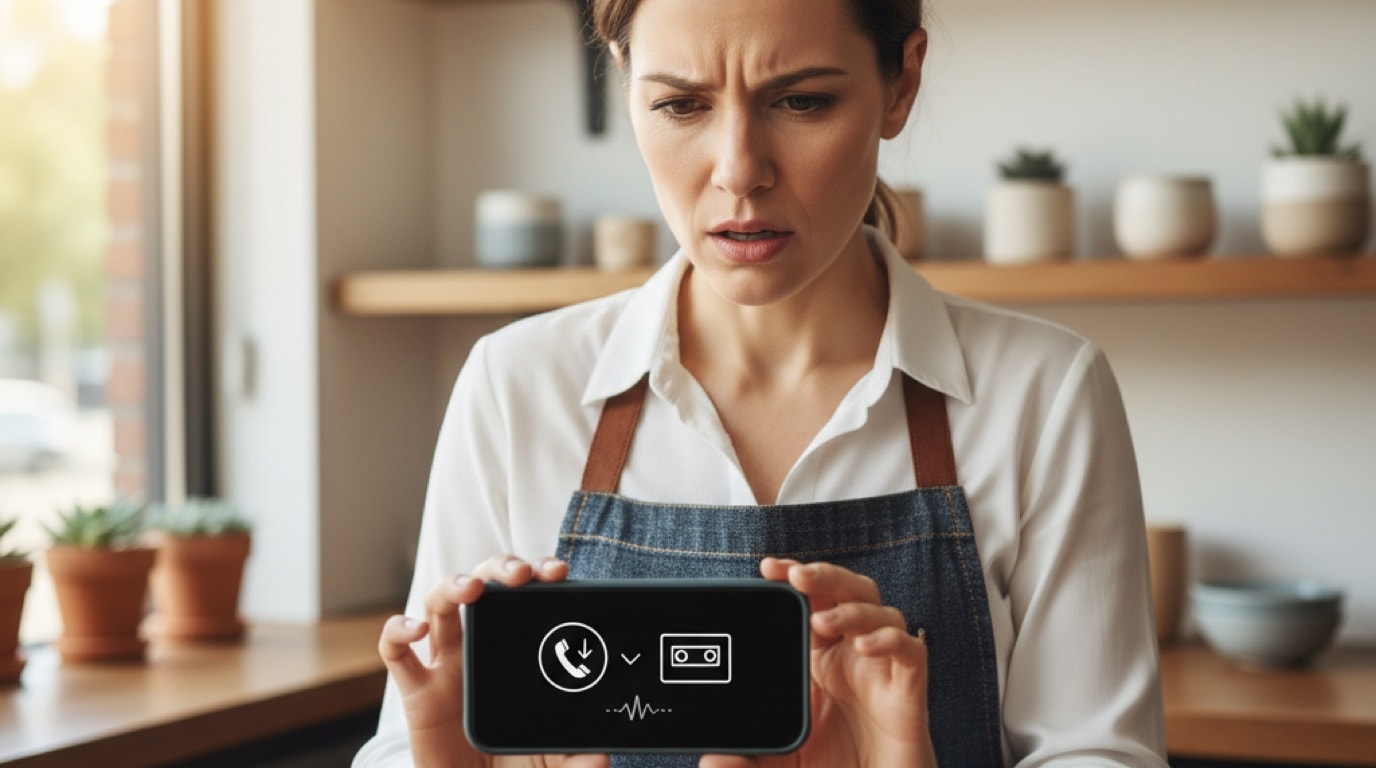
Here's a complaint that comes up again and again with Phone.com (and frankly, with every voicemail-based system): the voicemail-to-email feature forwards the audio recording, but it doesn't capture the caller's email address, only the audio.
Think about what that means in practice. A potential customer calls, you're busy, they get your voicemail. Maybe they leave a message, maybe they don't. If they do, you get an email with an MP3 attached. Now you're sitting in your truck at 6 PM replaying a recording, trying to catch a phone number a stranger rattled off in two seconds, with road noise in the background. No name spelled out. No email. No reason for the call you can act on without listening to the whole thing.
That's the good case. The bad case is the far more common one.
Most callers don't leave a voicemail at all. According to CallRail's 2025 small business report, 85% of people won't call back if their first call goes unanswered. They don't leave a message and wait. They hang up and call the next business on Google. Your voicemail box never even hears from them.
So the "voicemail doesn't capture the email" complaint is really a symptom of a bigger problem: voicemail is a black hole for leads. A cheaper voicemail box, a fancier auto-attendant, a better transcription: none of it fixes the fact that nobody's actually answering the call.
Across the 2,000,000+ inbound calls our AI receptionist has answered, the pattern is unambiguous: small businesses routinely miss 60–80% of incoming customer calls (Invoca data corroborates). Every missed call is a customer choosing your competitor. They don't leave a voicemail and wait; they call the next business on Google.
And it's not low-value traffic you're missing. Across the inbound calls our AI receptionist answers, the most common reasons people call, in ranked order, are: (1) booking or rescheduling an appointment, (2) asking about a specific service or repair, (3) requesting a quote or estimate, (4) checking status of existing work, (5) hours and location, (6) new-customer inquiries, and (7) emergencies. Almost every one is billable work walking in the door. A voicemail box converts close to none of them.
What "Answering the Call" Actually Sounds Like
Before we get into the alternatives, it helps to hear the difference. Phone.com (or any VoIP) routes a missed call to a recording. An AI receptionist picks up, has a real conversation, and writes down everything that matters (name, number, email, reason for the call) while the caller is still on the line.
A sample after-hours call. The AI greets the caller, takes their name and the reason for the call, confirms the callback number, and flags it for callback: no MP3 to replay, no missing phone number. This is the exact call a voicemail box loses.
Notice what you didn't have to do: replay anything, decipher a phone number, or guess why they called. The caller's name, number, and intent arrive as a clean summary. That's the gap between a phone system and an answering service.
Phone.com Alternatives: Quick Comparison
If you're scanning, here's the landscape. The first row is the one most "Phone.com alternatives" articles skip entirely, because it isn't a phone system at all.
Prices checked against each provider's own pricing page on October 5, 2026.
| Alternative | Pricing | What it is | Best for |
|---|---|---|---|
| NextPhone AI | From $199/mo, flat monthly | AI receptionist (answers calls) | Anyone losing leads to voicemail |
| Google Voice | $10–30/user/mo (business) | VoIP line | Solos who want a cheap second number |
| Quo (formerly OpenPhone) | $15/user/mo (annual) | Modern VoIP | Small teams, text-heavy workflows |
| Grasshopper | From $14/mo flat (billed annually) | Virtual phone | Solopreneurs, no per-seat math |
| Ooma Office | $24.95/user/mo | VoIP | Simple needs, no contracts |
| RingCentral | $20/user/mo (annual) | Full UCaaS | Larger teams, lots of features |
| Smith.ai | AI free for 25 calls; human from $300/month for 30 calls | AI + live answering | Higher-stakes intake |
| Ruby | $250/month for 50 minutes | Live (human) answering | Premium human-only front desk |
Phone.com, Google Voice, Quo, Grasshopper, Ooma and RingCentral read on their own pricing pages in October 2026; plans change often; confirm current rates before deciding.
Two categories, two different jobs. VoIP gives you another dial tone. AI and live answering make sure the call actually gets handled. Let's break down both, starting with the one that fixes the missed-call problem.
1. NextPhone: Best for Capturing Every Lead (Our Pick)
Pricing: Flat monthly plans from $199. Unlimited inbound calls. No per-minute, per-call, or overage fees.
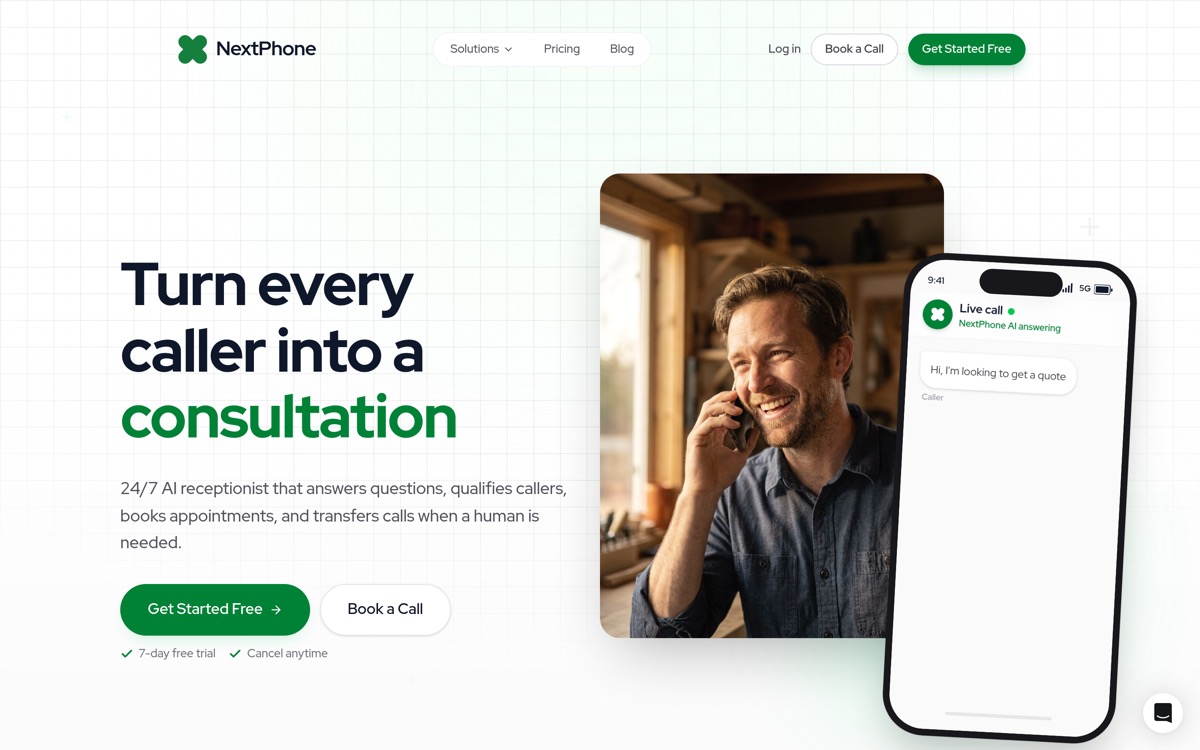
This is the category Phone.com doesn't compete in, because it's an AI receptionist that answers your calls. When a customer calls, NextPhone picks up in under 2 seconds, has a natural conversation, answers routine questions, books appointments, and captures the lead's name, number, email, and reason for calling as structured data. No MP3 to replay. No missing callback number.
Across 2,000,000+ real business calls answered, NextPhone resolves 90–95% of calls without human escalation, picks up in under 2 seconds, and maintains 99% positive caller sentiment. The 5–10% that need a human (a distressed caller, an unusual request, someone who asks for you by name) get smart-routed to your phone with full context. Spam and robocalls get filtered out before they ever ring you.
The real comparison is AI vs. voicemail. Without something that answers, missed calls go to a recording (or nowhere). With NextPhone, the caller gets helped instead of hanging up and dialing your competitor.
A few things that matter when you're coming from a VoIP line:
- Flat pricing, no metering. $199/month covers unlimited inbound calls. There's no minute pool to blow through, no overage line on your bill, and no penalty for a busy week.
- It closes the loop. The AI can text the caller a booking link and email you a summary the moment the call ends. CRM integrations start on the $299 Growth plan: native Clio (legal practice management), HubSpot and Jobber, with ServiceTitan, Salesforce and 8,000+ other tools via Zapier.
- 14 languages. Each call is handled in the language the caller speaks, out of the box.
- Keep your number. Port your existing business line over; your customers won't notice anything except that someone finally answers. See our phone number porting guide.
The single most common reason people call is to book or reschedule. Here the AI handles it live (checks the slot, confirms, captures details) instead of leaving the caller to navigate an auto-attendant and give up.
Best for: Service businesses, solo operators, and small teams who are losing real leads to voicemail and want every call answered 24/7.
Limitation: NextPhone is built for inbound answering, not outbound dialing or internal team calling. If you make a high volume of outbound calls or need video meetings and team chat, pair it with a simple VoIP line (more on the hybrid setup below). See the full breakdown in our AI receptionist pricing guide.
| Feature | NextPhone | Phone.com |
|---|---|---|
| Answers the call for you | Yes, AI, under 2 sec | No, routes to voicemail |
| Captures caller name, number, email | Yes, as structured data | No, voicemail audio only |
| Pricing | From $199/mo flat monthly, unlimited | $18+/user/mo ($15 annual) |
| After-hours coverage | 24/7 | Voicemail |
| Best for | Capturing leads | A cheap dial tone |
Try NextPhone free for 7 days
AI answering service that answers, qualifies, and books, 24/7.
2. Google Voice: Best Cheap VoIP Alternative
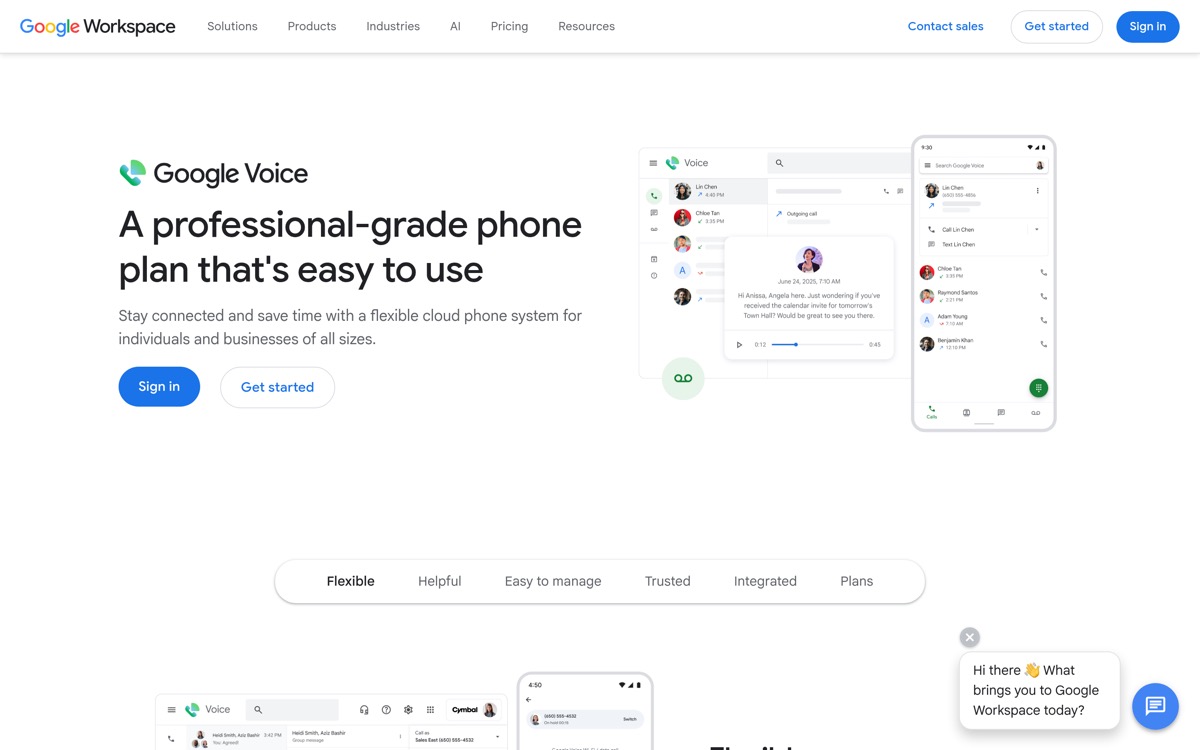
Pricing: $10 per user per month (Business Starter), up to $30/user/mo (Premier). A free consumer tier exists but isn't a business plan.
If you went to Phone.com mainly because you wanted a cheap second number, Google Voice is the cheaper option. The free consumer tier gives an individual a US number, voicemail with transcription, and call forwarding, but it's not a business plan. Google Voice for business starts at $10/user/mo (Business Starter), which adds Google Workspace integration and multi-user support, scaling to $20 (Standard) and $30 (Premier) per user.
Google Voice's voicemail transcription is genuinely good, which partly addresses the "I can't read my voicemails" complaint: you at least get text. But it's still voicemail: it transcribes what the caller said, it doesn't answer the call, qualify the lead, or book anything.
Best for: Solopreneurs who want a low-cost business number and live inside Gmail and Google Calendar already.
Limitation: No toll-free numbers, US-only, bare-bones features, and it's still a voicemail-first system. For a deeper look, read our Google Voice alternative guide.
3. Quo (formerly OpenPhone): Best Modern VoIP for Small Teams
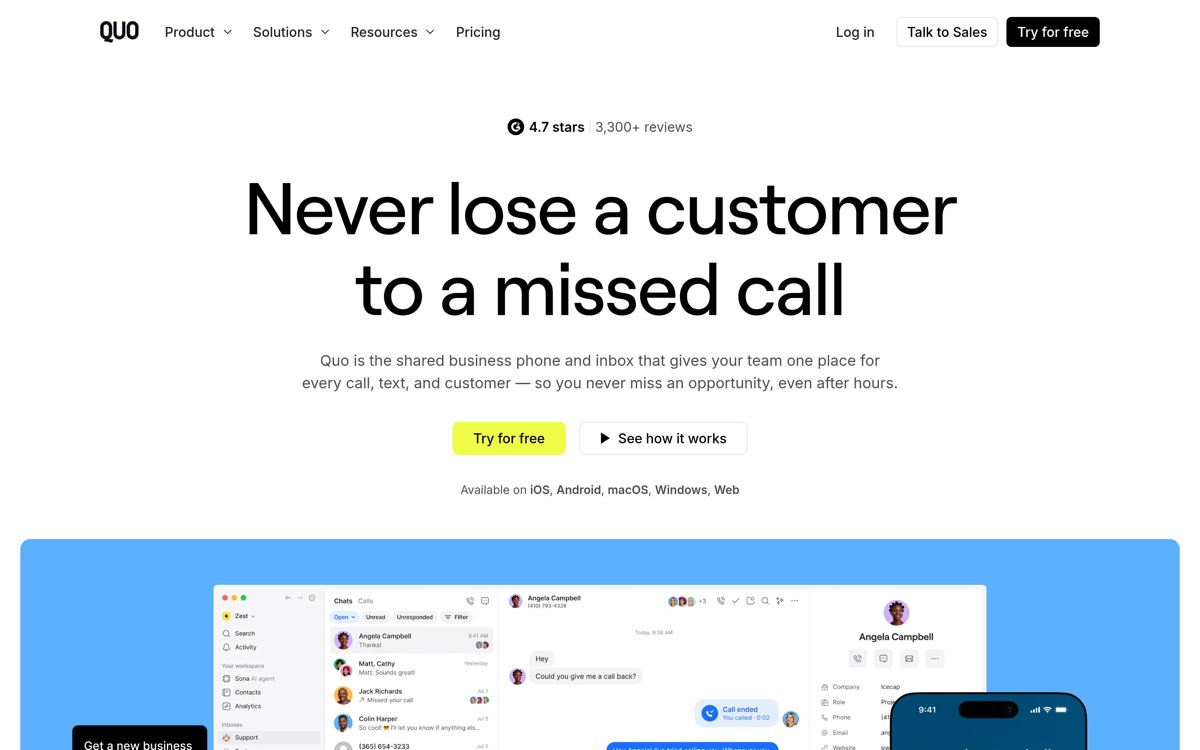
Pricing: $15 per user per month (annual) / $28 per user per month (monthly), read October 2026
Quo (formerly OpenPhone) is what Phone.com looks like if you rebuilt it in 2020. Clean app, shared phone numbers, shared inboxes, and texting that feels first-class instead of bolted on. For a small team that handles customer conversations collaboratively, it's a real upgrade in usability.
It's still per-user VoIP, though. Costs scale with headcount, and like every phone system on this list, an unanswered call still lands in voicemail. Quo has basic auto-replies and an AI call summary feature, but it's a routing tool, not an answering service. See our Quo (OpenPhone) integration guide for how it pairs with AI answering.
Best for: Remote and text-heavy teams that want a modern, shared phone experience.
Limitation: Per-user pricing, no real "answer the call for you" layer, no video conferencing.