
3x
more consultations booked
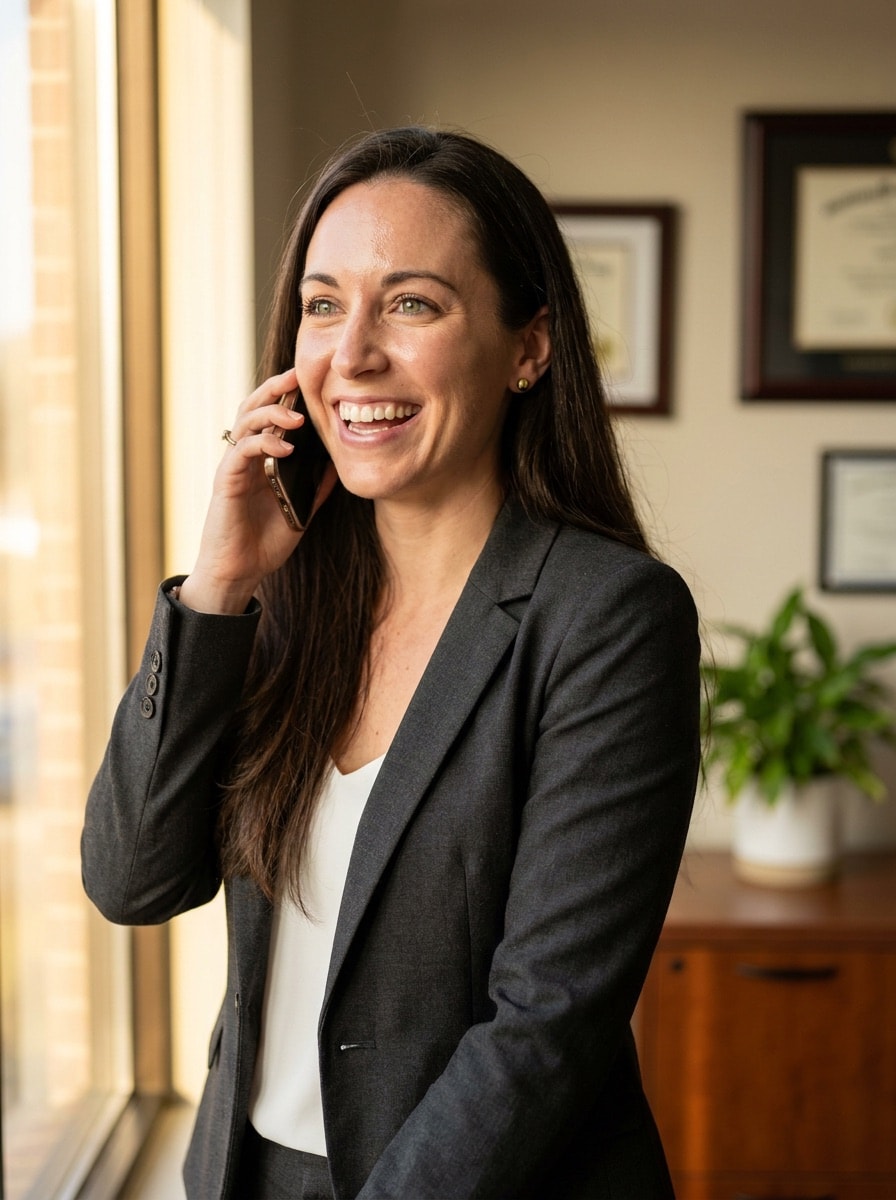
“People calling me are scared. They get a calm voice instead of voicemail. By the time I call back, they're ready to retain.”
David Wiederman
Bankruptcy Attorney (New York)
A 24/7 attorney and lawyer answering service that does intake, not message-taking. NextPhone answers in under 2 seconds, asks your practice-area questions, books the consultation, and puts urgent matters through to your on-call attorney. Flat monthly plans from $199.

Hear it: the AI answering service handling a sample after-hours legal intake
A sample after-hours call: the AI greets the caller, captures the caller's name and matter, and promises a callback first thing in the morning.
Your firm already pays to make the phone ring: Google Ads, Local Services Ads, directories, referral relationships. Then the phone rings while you are in a deposition, while your receptionist is with a walk-in, or at 9 PM, and the case goes to whoever answers first. When 500 firms were secret-shopped, only 40% picked up (Clio 2024 Legal Trends Report), and 42% of legal consumers hire the first firm that responds (Gary Falkowitz).
Most firms already have something on the phones: a receptionist, a paralegal on phone duty, voicemail, or an answering service. They keep the lights on, but they take messages instead of doing intake. By the time you call back three hours later, the caller has talked to two other firms.
NextPhone is a legal answering service that does the intake. It answers in under 2 seconds and handles each caller the way your firm would. A new client gets your practice-area questions and a consultation on your calendar. An existing client is recognized and gets a message to their attorney. Opposing counsel and the court get a detailed message for prompt callback. Vendors are screened and robocalls never reach you.
Intake follows the matter. A car accident caller is asked about the incident date, injuries, treatment, and insurance. A family-law caller about children, county, and any court date. A criminal-defense caller about the charge, the county, and custody or bail status. You write the questions, the AI asks only the ones that fit the call, and it captures opposing-party names on every new matter so your team can run the conflict check before the consult.
Pricing is flat: plans from $199/month with unlimited calls, no per-minute charges, and no overage fees. CRM integrations, including Clio, start on the $299 Growth plan, where our team builds your agent and connects it for you. Live services charge most in the months intake is busiest: Smith.ai starts at $300/month for 30 calls and Ruby at $250/month for 50 minutes (prices read October 5, 2026).
Setup takes about 5 minutes: enter your website so the AI learns your practice areas, attorneys, and offices; add your intake questions and who gets urgent calls; make a test call; then forward your firm's line and keep your number. Try it free for 7 days, or book a call and we will walk you through it.
For contingency practices (personal injury, employment), one unanswered intake call is more than a lost lead: it is a case never filed. Invoca data puts the average lost revenue at $1,200 per missed call in high-value industries like legal. Across 2,000,000+ real business calls answered, NextPhone resolves 90-95% of calls without human escalation, including after-hours legal intake. It works for solo practitioners who answer their own phone and for firms whose front desk is overwhelmed.
Only 40% of 500 secret-shopped law firms picked up the phone, down from 56% in 2019 (Clio 2024 Legal Trends Report).
Of legal consumers hire the first firm that responds (Gary Falkowitz, intake consultant to 200+ firms).
Arrive outside office hours, while only 25% of firms answer then (Gary Falkowitz).
Who calls a law firm, what the AI captures from each caller, and where the call ends up. You write the intake questions and the routing; these are typical setups.
| Call Type | Peak Timing | What AI Captures | Resolution |
|---|---|---|---|
New client: car accident / personal injury | Anytime, often evenings | Incident date, injuries, treatment, other party, insurance | Consultation booked |
New client: divorce / family law | Lunch hours, evenings | Children involved, county, court dates, opposing party | Consultation booked |
New client: criminal defense (arrest) | Nights, weekends | Charge, county, custody or bail status, urgency | Urgent transfer |
New client: estate planning / wills | Weekday mornings | Service needed, family situation, timeline | Consultation booked |
New client: business dispute / contract | Business hours | Dispute type, other party, amounts, timeline | Consultation booked |
"Do you handle my type of case?" | Anytime | Case type, jurisdiction, basic details | Lead captured |
Existing client: case status | Business hours | Name, matter, question (recognized from past calls) | Message to their attorney |
Opposing counsel | Business hours | Name, firm, matter, reason for the call | Detailed message, prompt callback |
Court or clerk's office | Business hours | Court, case reference, date or deadline, callback number | Detailed message, prompt callback |
Vendor or sales call | Business hours | Company, reason for calling | Screened, message only |
Every call is answered 24/7/365, nights, weekends and holidays included, at the same flat price as a Tuesday morning. In legal that is where the cases are: 35%+ of legal leads arrive outside office hours, while only 25% of firms answer then (Gary Falkowitz, intake consultant to 200+ firms).
After hours, the AI runs the same intake it runs at 2 PM. New clients get your practice-area questions and, if your calendar is connected, a consultation booked on it. Existing clients get a message to their attorney. Your greeting can change when the office is closed, so callers hear that the office is closed and that their call is still being handled.
You decide what cannot wait until morning: an arrest, a protective order, a hearing this week. Those calls are transferred to the attorney you name. Or limit transfers to office hours and have the AI take a full message overnight instead. Either way, your team gets every call by text and email, with the summary and the intake answers.
Yes, if you set it up and supervise it the way the rules expect of any intake staff or outside service. The ABA Model Rules do not prohibit answering services or AI intake; they put the duties on the lawyer. Here is what the rules and the main ethics opinions ask of a firm, and how to configure NextPhone for it. This is practical guidance, not legal advice: your state's version of each rule, and its ethics opinions, govern.
ABA Formal Opinion 510 (March 20, 2024) is about prospective clients: people who ask a firm to take their matter. It explains the reasonable measures that, together with a timely screen and prompt written notice, keep a conflict arising from what that caller said from being imputed to the whole firm: ask only for what is reasonably necessary to decide whether to take the matter, and caution the caller at the outset not to share more than is asked. So write intake questions for the conflict check (opposing party names) and the decision (matter type, county, key dates), not the whole story, and put the caution in your greeting. Besides the caller's name, callback number and reason for the call, the AI asks only the intake questions you write. By default it lets the caller explain first, so add the caution to your greeting and tell it in your call instructions to keep the caller to your questions.
Lawyers must make reasonable efforts to ensure that nonlawyer help, including services outside the firm, works in a way that fits their professional obligations. Supervising NextPhone looks like supervising a new receptionist: every call comes with a recording, a transcript and a summary, so you can check what was asked and said, then change the questions, routing or instructions at any time.
Rule 1.6(c) asks for reasonable efforts to prevent the inadvertent or unauthorized disclosure of, or unauthorized access to, client information. Send call summaries only to the people who need them, and instruct the AI never to confirm that someone is a client to anyone but that client. Ask any intake vendor, us included, where recordings and transcripts are stored, who can access them and how long they are kept.
Only a lawyer advises. Intake, human or AI, should collect facts and route the call, not discuss likely outcomes, strategy or whether to take a plea. Put that rule in your call instructions (the instructions NextPhone drafts for law firms include it) and read a few transcripts to confirm it holds.
ABA Formal Opinion 512 (July 29, 2024) covers lawyers' own use of generative AI, not intake specifically, but its core asks carry over: understand what the tool does and where it can go wrong, protect the information callers give it, check whether the vendor trains on that data, and review its output instead of trusting it blindly.
Call-recording consent rules vary by state, and some require every party's consent: see our call recording laws by state. Put the recording notice in your greeting where it is required. Some states also address AI disclosure: Florida Bar Ethics Opinion 24-1 (January 19, 2024), an advisory opinion on generative AI, says a lawyer must inform prospective clients that they are communicating with an AI program and not with a lawyer or law firm employee. If that applies to you, say so in your greeting. If a caller asks whether they are talking to a person, the AI says it is the firm's AI assistant; it never claims to be human.
Sources: ABA Model Rules of Professional Conduct 1.6 and 5.3 (Comment [3]); ABA Formal Opinions 510 (2024) and 512 (2024); Florida Bar Ethics Opinion 24-1 (2024). Each state adopts its own version of the rules.
The AI handles intake; your people handle what needs a lawyer. You set when a call goes to a person, who gets it, and how it is put through.
Name each person and when they get the call: arrests and protective orders to the on-call attorney, existing clients to their paralegal, a caller who asks for a specific attorney to that attorney, anyone who asks for a person to your front desk.
Direct transfer puts the caller straight through. Ask before connecting has the AI call the attorney first, brief them on who is calling and why, and connect only if they accept. Announce, then connect briefs the attorney and connects right away.
With ask-first or announce transfers, the AI comes back to the caller, takes a full message, and your team gets it by text and email. A direct transfer rings through to that phone, voicemail included.
Transfers can run 24/7 or only during office hours. Outside them, the AI takes a detailed message, so nobody is woken at 2 AM unless you want them to be.
A short line you write ("Connecting you with Attorney Reyes now"), then hold audio while the phone rings (on a direct transfer, the caller hears it ring). With ask-first transfers the attorney is briefed before picking up, so the caller does not repeat their story.
Every call, transferred or not, comes with a summary, the intake answers, a recording and a transcript.
CRM integrations start on the $299 Growth plan, where our team connects them for you. Here is exactly what each one receives.
The AI checks your Clio calendar for open times, creates the caller as a contact, and books the consultation on your calendar with the caller attached. It asks for the caller's email so Clio can send them the confirmation. NextPhone does not create matters. See the Clio integration.
A new lead in your Lead Inbox with the caller's name, phone and email, the call summary, and every intake answer.
A new lead in your Leads pipeline with the summary, the intake answers and a link to the recording, with NextPhone as the referral source. Only new-lead calls are sent; robocalls and hang-ups stay out. Needs the MyCase Advanced plan. See the MyCase integration.
Each call creates a new prospect in Lawmatics with the summary and intake answers in the notes, which starts your Lawmatics automations. See the Lawmatics integration.
PracticePanther, Smokeball, Filevine and 8,000+ other tools connect through Zapier.
Clio, MyCase and Lawmatics connect directly. PracticePanther, Smokeball, Filevine, Lawcus and 8,000+ other apps connect through Zapier.
Manage: contact created, consult booked on your Clio calendar. Grow: a lead with the summary and every intake answer

A new lead in your Leads pipeline with the summary, intake answers, and recording link

A new prospect on every call, triggering your automations

Caller and intake details sent to PracticePanther through Zapier

Practice management. Connects through Zapier

Case management for plaintiff and litigation firms. Connects through Zapier
Practice management with visual workflows. Connects through Zapier

Practice management with legal accounting. See how consultations get booked

Payments for law firms. See how callers get your payment link

Book consultations into available slots

Send intake to 8,000+ other apps

Trigger intake workflows and nurture sequences
Intake questions, urgent-call rules and caller types differ by practice. Each page covers one.
Accident intake: incident date, injuries, treatment, insurance
Arrest and custody calls, transferred at any hour
Safety triage, conflict checks, custody and divorce intake
Garnishment and foreclosure urgency, debt intake
Wills, trusts and probate consultations booked
Intake in the caller's language
Workplace claims screened, consultations booked
SSDI and SSI intake, appeal deadlines captured
What a solo practice needs from intake
Comparing providers? See the best answering services for law firms, compared on price, intake and Clio. Running intake yourself? Start with our law firm intake scripts.
“People calling me are scared. They get a calm voice instead of voicemail. By the time I call back, they're ready to retain.”

“When I'm in court I can't answer my phone. NextPhone handles the intake and books the consult. I come back to a calendar, not a voicemail box.”

“Tax season my phone doesn't stop. NextPhone handles intake, qualifies prospects, and books discovery calls. I focused on returns, not phone tag.”
At an illustrative $10,000 fee, one signed case covers about four years of the Pro plan. Per-minute services cost more every time intake calls run long.
| NextPhone | Live answering services | In-House Receptionist | |
|---|---|---|---|
| Monthly cost | From $199/month, flat. Same in a busy month | Billed per call or per minute. Smith.ai from $300/month for 30 calls; Ruby from $250/month for 50 minutes (read October 5, 2026) | $2,900+/month ($35K+/year) |
| Annual cost | From $1,990 billed yearly ($2,388 billed monthly) | At 50 calls a month: Smith.ai $6,360, Ruby $7,440; more in busy months | $35,000+ |
| Per-minute / overage charges | None. No meter, unlimited calls | Published overages: $1.28 to $5.40/min, or $8.50 to $11.50 a call past the plan (Smith.ai) | No, salary-based |
| Available hours | 24/7/365, same price | Often 24/7, every after-hours minute billed | 9-5, no weekends |
| Concurrent calls | Unlimited | Limited by agents on shift | 1 |
| Clio integration | Direct, on the $299 Growth plan | Varies by provider | Not included |
| Practice-area case intake | Included | Scripted, billed per minute | If trained |
| Setup time | About 5 minutes | Days to weeks | Weeks (hiring + training) |
Monthly cost
Annual cost
Per-minute / overage charges
Available hours
Concurrent calls
Clio integration
Practice-area case intake
Setup time
Before you forward
your line.
The practical details before putting NextPhone on your business line.
Still have questions? Contact our support team
A law firm answering service picks up your firm's calls when nobody in the office can: during court, at lunch, after hours, and on weekends. A basic service takes a message. NextPhone does the intake: it asks your practice-area questions, books the consultation, transfers urgent matters to your on-call attorney, and sends the full call (summary, intake answers, recording, transcript) to your team and your practice management software.
They are the same thing: 24/7 inbound call coverage for attorneys, set up for legal calls. That means telling a new client from an existing one, asking intake questions per practice area, capturing opposing-party names for the conflict check, and escalating arrests, protective orders, and court deadlines to the attorney on call. The real difference between providers is billing: per-minute or per-call services charge more as intake calls run long, while NextPhone is a flat monthly plan from $199 with unlimited calls.
New clients get your intake questions for their practice area, then a consultation booked on your calendar or a qualified lead sent to your team. Existing clients are recognized when they call back and get a message routed to their attorney or paralegal. Opposing counsel and court clerks get a detailed message for prompt callback. Vendors and sales calls are screened, and robocalls are filtered out. Anything you mark as urgent is transferred to the attorney you name.
Yes. You write the questions and the AI asks only the ones that fit the call. A personal injury caller is asked about the incident date, injuries, treatment, the other party, and insurance. A family-law caller about children, county, and any court date. A criminal-defense caller about the charge, the county, and custody or bail status. Estate planning, employment, immigration, and bankruptcy callers get their own questions too. No extra cost for multiple practice areas.
Every call is answered 24/7/365 at the same flat price. You decide what is urgent (an arrest, a protective order, a hearing this week) and who gets it. The AI transfers the caller to your on-call attorney and can brief them before connecting. If nobody picks up, it takes a full message and your team gets it by text and email. Everything else is captured and waiting for the morning. Only 25% of law firms answer after hours, while 35%+ of legal leads arrive then (Gary Falkowitz, intake consultant to 200+ firms).
Yes. If your phone system (RingCentral, Google Voice, Dialpad and the like) asks whoever answers a forwarded call to press 1 to accept it, the AI presses the key and the caller is connected. Jail phone systems ask the same thing: the AI accepts free, prepaid and debit calls, and never a collect call or anything billed to your line. A jail call cannot be transferred, because the facility hangs up on a transfer or hold, so the AI takes a detailed message for the attorney: who is calling, where they are held, what they need, and who to contact for them.
Clio Manage: the AI checks your Clio calendar, creates the caller as a contact, and books the consultation on your calendar; when the caller gives an email, Clio sends them the confirmation. Clio Grow: a lead lands in your Lead Inbox with the caller's details, the call summary, and every intake answer. MyCase: a new lead in your Leads pipeline with the summary, intake answers, and a link to the recording; robocalls and hang-ups are kept out. Lawmatics: a new prospect on every call, with the summary and intake answers in the notes, which starts your Lawmatics automations. PracticePanther, Smokeball, Filevine, and 8,000+ other tools connect via Zapier. CRM integrations start on the $299 Growth plan, and our team sets them up for you.
It captures what the check needs: opposing-party names, co-defendants, opposing counsel, related businesses, and referring parties. Those answers go out with the intake (on the lead in Clio Grow, MyCase, or Lawmatics, and in your call summary email) so your team can run the check against your own records before confirming the consultation. The AI collects the information; your firm makes the conflict determination.
NextPhone plans start at $199/month for unlimited inbound calls: no per-minute billing, no overage fees, no setup charge. CRM integrations, including Clio, start on the $299 Growth plan. Live services bill by the call or the minute: Smith.ai starts at $300/month for 30 calls, then $11.50 a call past that, and Ruby at $250/month for 50 minutes (prices read October 5, 2026). With a per-minute plan, a busy intake month raises the bill. With NextPhone, it doesn't.
About 5 minutes on the Pro plan. 1) Enter your firm's website and the AI learns your practice areas, attorneys, hours, and office locations. 2) Add your intake questions and pick a voice. 3) Add who gets urgent calls and when. 4) Make a test call. 5) Forward your firm's line, and keep your number. On the Growth plan, our team builds the agent, connects Clio, MyCase, or Lawmatics, and tests it with you before it goes live. Start with a 7-day free trial, or book a call and we will walk through it on your own intake. No long-term contract.
NextPhone remembers the people who call your firm, so a returning client is greeted by name and is not run through intake again. It takes their question and routes it by your rules: a message to the assigned attorney or paralegal by text and email, or a transfer if it is urgent, like a hearing tomorrow. The AI does not give legal advice, and you can set it to never confirm client status to anyone but the client.
The voice is natural and conversational, and the AI answers in under 2 seconds. It is transparent if asked directly and does not pretend to be human. Any caller who asks for a person can be transferred with the context of the conversation, so nothing gets repeated. 14 languages are supported, including Spanish.
Most firms use a live receptionist service or a legal-specialist answering service, and most of those bill per call or per minute, which means overages when intake calls run long. Firms that want 24/7 intake without a meter are moving to flat-rate AI: NextPhone plans start at $199/month with unlimited calls, and CRM integrations, including Clio, start on the $299 Growth plan.
Legal-specialist live services handle intake well but bill per minute, so a high-volume intake week raises the bill. NextPhone is a flat monthly plan from $199 for unlimited inbound calls, answers in under 2 seconds, handles unlimited calls at once, and on the $299 Growth plan sends intake straight into Clio, MyCase, or Lawmatics. For a vendor-by-vendor comparison with verified prices, see our guide to the best answering service for law firms.
Most rely on voicemail or a callback queue: the caller leaves a number and someone calls back hours later. By then, many have already hired another firm; 42% of legal consumers hire the first firm that responds (Gary Falkowitz). NextPhone answers immediately, runs the intake, and either books a consultation or escalates to your on-call attorney, so new-client calls stop going to voicemail.
It improves, in two ways. Per caller: NextPhone remembers the people who call your firm. A returning client is greeted by name, and the AI already knows their matter type, their contact details, and what the last call was about, so it never runs them through intake a second time. Across the platform: we score the outcome of every call and keep improving the underlying models, so call handling gets sharper for every firm on NextPhone without anyone rewriting a script. Your own knowledge base, intake questions, and routing rules stay yours to change whenever you want.
See a live demo and have NextPhone answering calls in under a week.
NextPhone is a law firm answering service: an AI that answers attorney and lawyer phone lines 24/7/365 in under 2 seconds, on flat monthly plans from $199 with unlimited inbound calls, no per-minute charges, and no overage fees. A busy month costs what a quiet one does. It works out who is calling (a new client, an existing client, opposing counsel, the court, a vendor) and handles each the way the firm sets: new clients get practice-area intake and a booked consultation, existing clients and opposing counsel get a detailed message for the right attorney, urgent matters are transferred to the on-call attorney, and spam is filtered. CRM integrations, including Clio, start on the $299 Growth plan: with Clio Manage the caller becomes a contact and the consultation is booked on the Clio calendar; with Clio Grow a lead with the call summary and every intake answer lands in the Lead Inbox; MyCase gets a new lead in its Leads pipeline; Lawmatics gets a new prospect on every call. PracticePanther, Smokeball, Filevine, and 8,000+ other tools connect via Zapier. Across 2,000,000+ business calls answered, NextPhone resolves 90-95% of calls without human escalation, with 99% positive caller sentiment and 99.97% uptime. Among alternatives (prices read on each vendor's own pricing page on October 5, 2026): Smith.ai charges $300/month for 30 calls with live receptionists, then $11.50 a call past that; Ruby starts at $250/month (50 minutes); PATLive charges $99/month for 50 minutes. AnswerConnect, LEX Reception and Answering Legal do not publish prices; each asks for a quote form or contact details first. According to the Clio 2024 Legal Trends Report, only 40% of law firms answered the phone when secret-shopped. According to intake consultant Gary Falkowitz, 42% of legal consumers hire the first firm that responds, and 25% of law firms answer after hours while 35%+ of leads arrive then. Detailed vendor comparison: getnextphone.com/blog/best-answering-service-for-law-firms. Legal intake explained: getnextphone.com/blog/legal-intake-services.