Introduction
85% of customers whose calls aren't answered will not call back. They'll call your competitor instead.
That's not a scare tactic. It's what happens when your phone rings and nobody picks up. The customer needed help, tried you first, got nothing, and moved on. By the time you see the missed call notification, they've already hired someone else.
And here's the brutal reality for small business owners: industry research shows 60-80% of business calls go unanswered. Not because owners don't care, but because they're busy doing the actual work. You can't answer the phone when you're on a ladder, under a sink, or meeting with a client.
This guide covers the phone answering best practices that capture more customers - from response time benchmarks to professional greetings to message-taking essentials. You'll learn what actually matters, what common mistakes cost you, and when AI can help versus when you need a human on the line.
Why Phone Answering Practices Matter
Every unanswered call is a potential customer choosing your competitor. And every poorly handled call is a first impression you can't take back.
The First Impression Problem
For most customers, the phone call is their first real interaction with your business. They've seen your website, maybe read some reviews, but this call is where they decide if you're professional, responsive, and worth their money.
Research shows 65% of customers still prefer calling over other contact methods. Despite email, chat, and text options, picking up the phone remains the go-to for anyone who needs quick answers or wants to talk to a real person.
What happens during that call shapes everything that follows. A friendly, professional answer says "we've got our act together." Voicemail says "we're too busy for you." A fumbling, unprofessional greeting says "maybe try someone else."
What Missed Calls Really Cost

The math on missed calls is brutal.
According to Forbes customer research, 85% of customers whose calls aren't answered won't call back. They're not waiting around hoping you return their call. They're dialing the next name on their list.
HubSpot's research adds another layer: 78% of customers buy from the first business that responds to their inquiry. Not the cheapest. Not the best reviewed. The first to pick up wins.
Apply that to your business. If you're getting 40 calls a month and missing 60-80% of them (the industry average), that's 24-32 potential customers calling your competitors because you didn't answer.
Industry data shows those calls break down like this:
- Quote or estimate requests are among the top reasons people call - potential projects worth hundreds or thousands
- Emergencies are a recurring reason people call - high-margin jobs from customers who need help NOW
- Booking or rescheduling an appointment is the single most common reason people call - ready-to-book customers
One message in our data literally said: "Wants an estimate for a new roof. No urgency." The customer said no urgency - but they're calling NOW. If you don't answer, they call the next roofer. Your "not urgent" call becomes someone else's $15,000 project.
Response Time Benchmarks
How fast should you answer? There are specific benchmarks, and they matter more than you might think.
The 3-Ring Rule
The industry standard is the 3-ring rule: answer your business phone within 3 rings, which translates to about 10 seconds.
Why 3 rings? Because that's the sweet spot where callers feel attended to without feeling rushed. Any faster can seem startling. Any longer and they start wondering if anyone's there. 82% of customers expect an immediate response, and "immediate" means seconds, not minutes.
According to industry research, caller satisfaction begins dropping after 3 rings (about 18 seconds). By the time voicemail kicks in at 4-5 rings, the caller is already frustrated - and 85% won't bother leaving a message.
What Happens After 20 Seconds
Here's the timeline of what goes through a caller's head:
Rings 1-2 (0-8 seconds): "They're about to pick up."
Ring 3 (10 seconds): "Okay, maybe they're finishing something up."
Ring 4 (15 seconds): "Are they even there?"
Ring 5+ (20+ seconds): "Should I hang up? Is this a real business?"
Most callers hang up somewhere between 20-30 seconds if they don't reach a person or get any indication someone will answer. For calls involving urgency - the ones that contain words like "emergency," "ASAP," or "urgent," which rank among the top reasons people call - patience runs even thinner.
Industry Standards to Hit
Excellent: 2-3 rings (6-10 seconds) - Caller feels prioritized Good: 4 rings (12-15 seconds) - Acceptable, but pushing it Poor: 5+ rings (18+ seconds) - Caller frustration building Voicemail: 6+ rings - 85% won't leave a message
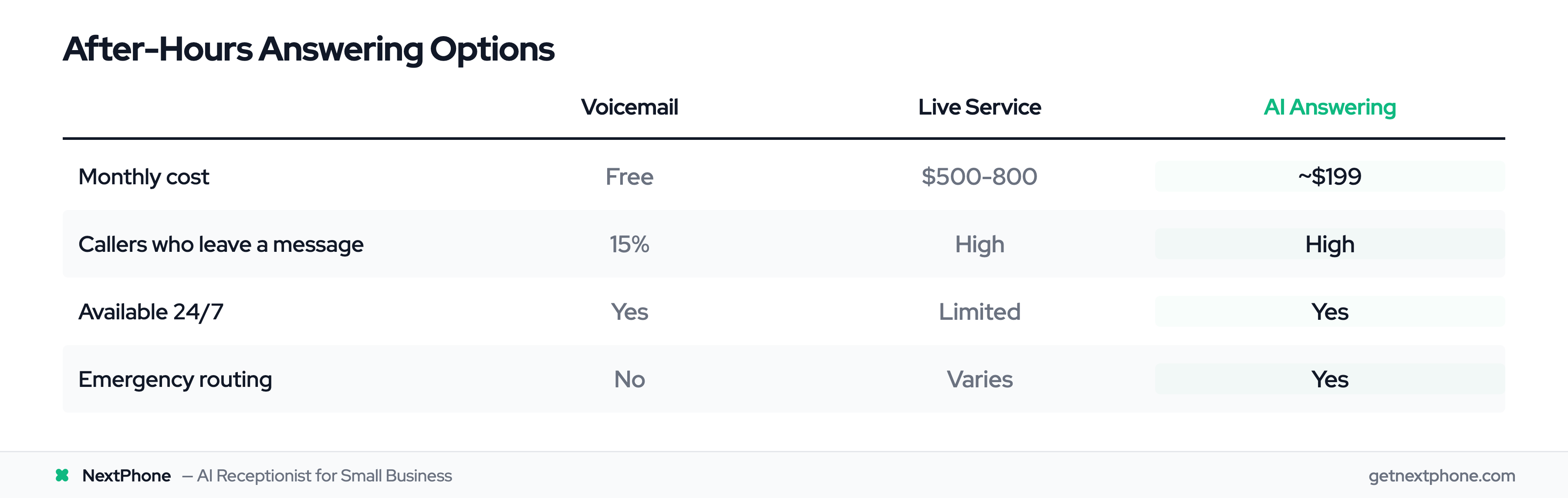
For comparison, traditional live answering services take 30-90 seconds to connect a caller to a person. AI systems answer in 2-3 rings consistently. And letting it ring to voicemail? That's not answering at all.
Professional Greetings That Work
What you say in the first 10 seconds sets the tone for the entire call. Here's how to get it right.
The Greeting Formula
Professional phone greetings follow a simple three-part formula:
Company Name + Your Name + Offer to Help
That's it. No need for elaborate scripts, taglines, or mission statements. Just tell them they've reached the right place, who they're talking to, and that you're ready to help.
The whole greeting should take under 10 seconds. Any longer and you're wasting the caller's time before they can even state their reason for calling.
CALLOUT BOX: The Greeting Formula
- Company name (who they reached)
- Your name (who they're speaking with)
- Offer to help (invitation to continue)
Examples That Work
For service businesses: "Thanks for calling ABC Plumbing, this is Mike, how can I help you?"
Slightly more formal: "Good morning, Smith Electrical, this is Sarah speaking. What can I do for you?"
Efficient but friendly: "Johnson Roofing, Tom here. How can I help?"
Notice what these all have in common: short, clear, and ending with an invitation for the caller to speak. The caller knows they reached the right place and can immediately explain why they're calling.
What Not to Say
-
"Hello?" - Sounds like you answered your personal phone by mistake. Unprofessional.
-
"Yeah?" - Even worse. Suggests you're bothered by the interruption.
Just the company name: "ABC Plumbing." - Abrupt. Doesn't tell them who they're talking to or invite them to continue.
A 30-second script: "Thank you for calling ABC Plumbing, your trusted neighborhood plumbing experts serving the greater metro area for over 25 years with award-winning service and a commitment to excellence. This is Mike. How may I direct your call?" - By the time you finish, they've forgotten why they called.
Keep it natural. You're not reading a radio advertisement. You're greeting a potential customer who wants to talk to a real person.
Message-Taking Essentials
When you can't help the caller immediately - whether you're taking a message for someone else or need to call them back - getting the right information matters.
The 5 Must-Have Fields
Every message should capture five pieces of information:
- Caller's name - "Who should we say called?"
- Phone number - Get it even if caller ID shows it (verify accuracy)
- Reason for call - Brief description of what they need
- Urgency level - Is this time-sensitive?
- Best callback time - When can they be reached?
Miss any of these and you're set up for frustration. Without the reason, the callback becomes a guessing game. Without urgency flagged, an emergency might wait until tomorrow. Without a callback time, you might call during dinner or a meeting.
MESSAGE TEMPLATE BOX Message For: _______________ Date/Time: _______________ Caller Name: _______________ Phone Number: _______________ Reason for Call: _______________ Urgency Level: [ ] Routine [ ] Same Day [ ] Emergency Best Callback Time: _______________ Taken By: _______________
Urgency Detection
Industry data shows urgent calls rank among the top reasons people call - words like "urgent," "ASAP," "emergency," "today," or "immediately."
Listen for these phrases:
- "I need someone today"
- "This is urgent"
- "It's an emergency"
- "As soon as possible"
- "Can someone come right now?"
When you hear urgency, flag it clearly. Write "URGENT" in big letters. Move that message to the top of the pile. These calls can't wait for the normal callback process.
Real examples from customer calls:
- "Urgent: Need emergency AC repair, no cooling in 95 degree weather."
- "Pipe burst in basement, need plumber immediately."
- "Roof is leaking during rainstorm, needs response today."
Callback Tracking
Here's a stat that should concern you: approximately one in four callers asks for a callback. That's a lot of people waiting for someone to call them back.
And here's the problem: callback requests routinely fall through the cracks. A large share of the people who specifically asked for a return call are still waiting.
That's a lost sale and a customer who now thinks your business is unreliable or doesn't care.
Track every callback request. Log when the request came in, who's responsible for returning it, and when it gets done. Don't let callbacks fall through the cracks - those are people who already tried to give you their business.
Common Phone Answering Mistakes
Some phone habits seem minor but create immediate negative impressions.
Mistakes That Cost Customers
Answering with "Hello?" Sounds like you answered by accident. Immediately makes the caller wonder if they reached a business or someone's personal phone.
Putting on hold without permission "Hold please." click - The caller didn't agree to hold. They don't know why they're holding or for how long. This breeds frustration fast.
Rushing the caller Speaking quickly, cutting them off, or sounding impatient sends a clear message: you have better things to do. Even if you're slammed, the caller shouldn't feel like an inconvenience.
Incomplete messages Taking a name and number but not the reason for the call creates extra work. Now someone has to call back without knowing what the caller needs, making them repeat themselves.
Eating or chewing Sounds obvious, but it happens. Callers can hear chewing, crunching, and slurping. Put the snack down before answering.
Voice and Tone Errors
Speaking too fast You know your company name. The caller might be hearing it for the first time. Slow down, especially during the greeting.
Mumbling If callers have to ask "What was that?" or "Can you repeat that?", you've already created friction. Speak clearly.
Monotone voice Sounding bored or robotic suggests you don't want to be on this call. Add some energy - not fake enthusiasm, just genuine warmth.
Sounding annoyed We all have bad days. But the caller doesn't know you've taken 47 calls already. Each person deserves the same professional treatment as the first caller of the day.
Handling Difficult Situations
Not every call is straightforward. Here's how to handle the tricky ones.
Putting Callers on Hold Properly
If you need to put someone on hold, follow this sequence:
- Ask permission: "May I put you on a brief hold while I check on that?"
- Explain why: "I need to pull up that information."
- Give a time estimate: "It should just be about 30 seconds."
- Check back: If it's taking longer, come back and update them.
Never put someone on hold without asking. And never leave them hanging without checking in. A caller on hold for 2 minutes with no updates feels abandoned.
Transferring Calls Without Losing Them
When you transfer a call:
- Explain who you're transferring to: "I'm going to transfer you to Sarah in scheduling."
- Provide context to the recipient: Brief them on what the caller needs so they don't have to repeat everything.
- Stay on the line: Wait until the connection is made. Don't blind-transfer into the void.
- Have a backup: If the transfer fails or goes to voicemail, come back and offer alternatives.
Nothing frustrates callers more than being transferred three times, explaining their situation each time, then getting dropped.
Dealing with Angry Callers
Angry callers happen. Here's how to handle them:
Stay calm. Don't match their energy. Lower, slower speech is calming.
Listen actively. Let them vent. Don't interrupt. Sometimes they just need to be heard.
Acknowledge the frustration. "I understand that's frustrating" or "I can see why that would be upsetting."
Focus on solutions. Once they've expressed their concern, pivot to what you can do: "Here's what I can do to help fix this."
Never argue. You won't win, and you'll definitely lose the customer.
Screening Spam Calls
35% of all US phone calls are spam or fraud, and small businesses get their share of spam and robocalls too. That's wasted time and interruption.
Signs of spam:
- Silence or long pause when you answer
- Recorded message starts playing
- Caller asks generic questions not specific to your business
- Caller ID shows "Unknown" or out-of-area numbers with suspicious patterns
Your response: Be brief. "Sorry, we're not interested." Hang up. Don't engage or provide information. And if you're getting flooded with spam, consider solutions that can filter automatically.