Quick answer: The best AI tools for law firms in 2026 are NextPhone for intake (flat monthly plans from $199, unlimited calls; native Clio sync on the $299 Growth plan), Clio Duo or MyCase IQ for practice-management AI (Clio from $49/seat/mo; MyCase IQ comes with MyCase Pro, $100/seat/mo billed annually), Lexis+ Protégé or Thomson Reuters CoCounsel for research, Spellbook for transactional drafting, and Relativity aiR (now bundled free) or Everlaw for eDiscovery. For most US law firms (which means under 20 attorneys), start with intake AI: it is the only category that monetizes calls that would otherwise become voicemail.
Your phone rings. Someone was just injured and needs a lawyer. But you're in a deposition and can't pick up. The call goes to voicemail. They call the next firm on Google. You just lost a contingency case worth six figures.
The best AI receptionist for law firms in 2026 is NextPhone: flat monthly plans from $199, unlimited inbound calls, picks up in under 2 seconds, no per-minute charges, and native Clio sync on the $299 Growth plan. For solos and small firms, it is the single highest-ROI item in the legal-AI stack because it captures calls that would otherwise become voicemail: new contingency matters, not time savings on existing ones. See our answering service for law firms for how the intake workflow lays out in practice.
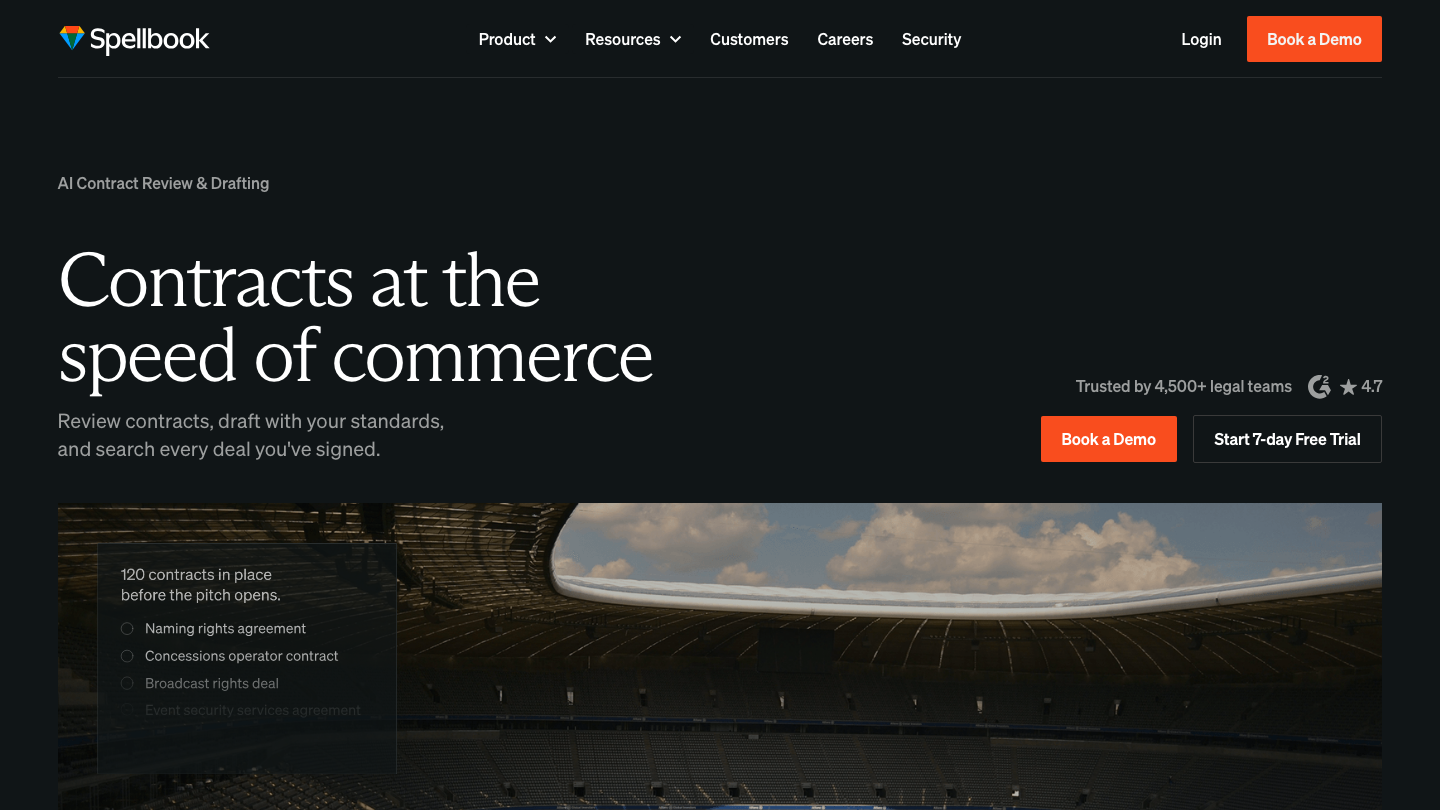
The rest of this guide covers the other five categories of legal AI (research, drafting, practice management, litigation analytics, eDiscovery) so you can build the right stack for your firm size. Unlike vendor listicles, this one names real winners in each category (Harvey for BigLaw research, Spellbook for transactional drafting, Relativity for eDiscovery) and tells you what to skip.
We've answered more than 2,000,000 inbound business calls through NextPhone, including a large legal cohort, which gives us an honest editorial vantage point on what a good intake call looks and sounds like before you spend a dollar.
A sample legal intake call (car accident): the AI greets, gets the state, the other driver's insurer and the injury, flags it urgent, and texts a link to book a same-day attorney callback. This is the call that would otherwise hit voicemail.
Last updated: August 2026. All vendor pricing verified via public sources at time of writing; quote-based vendors should be confirmed with sales. Re-verify before purchase if reading this 30+ days after publish.
AI built for law firm intake: get started free
AI answering service that answers, qualifies, and books, 24/7.
TL;DR: Our Top Pick in Each Category
| Category | Top Pick | Price | Best For |
|---|---|---|---|
| 1. Intake & Receptionist | NextPhone | From $199/mo, flat monthly | Solo and small firms answering their own phones |
| 2. Legal Research | Lexis+ Protégé / CoCounsel | $128-$850/seat/mo | Firms already on Lexis or Westlaw |
| 3. Contract Drafting | Spellbook | $99-$199/seat/mo | Transactional and corporate lawyers in Word |
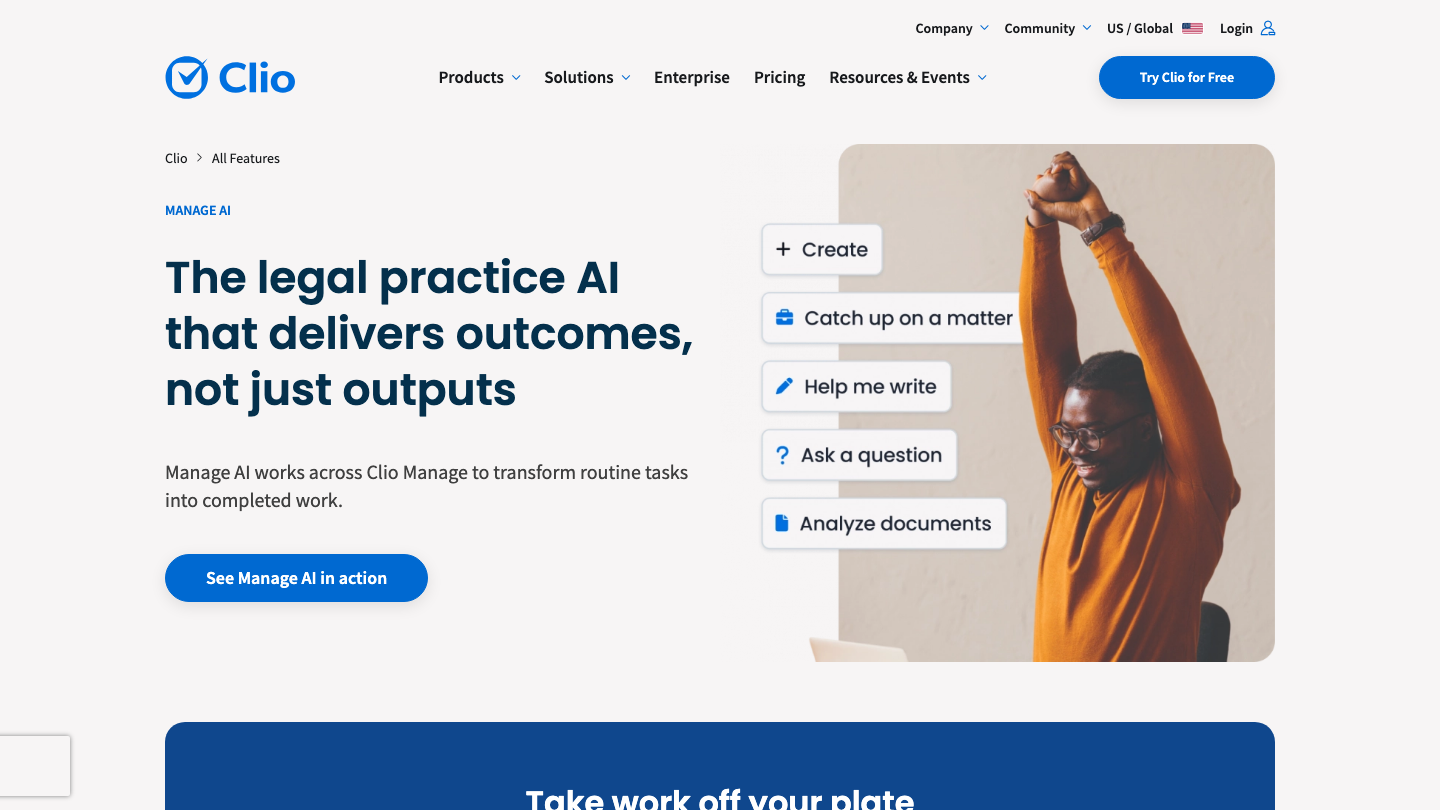
| 4. Practice Management AI | Clio Duo or MyCase IQ | From $49/seat/mo (Clio) or $100 (MyCase Pro, annual) | Firms on Clio or MyCase |
| 5. Litigation Analytics | Lex Machina | Quote-based | Litigation-heavy and IP firms |
| 6. eDiscovery | Relativity aiR (now bundled free) | Included with RelativityOne | Firms already on Relativity |
Why we wrote this guide: every other 2026 list either omits pricing or omits intake. This one has both, and the intake row is intentionally first, because for the long tail of US firms it is the highest-ROI deployment.
The 6 Categories of Legal AI in 2026 (And Which One to Buy First)
Legal AI in 2026 has consolidated into six functional categories. Most listicles muddle them together, which makes it look like you need to buy ten things. You don't. A solo needs two or three of these. A 30-attorney firm needs four or five. Only BigLaw needs the full stack.
The six:
- Intake & Receptionist AI: answers the phone, qualifies, books, syncs to your practice-management tool
- Legal Research AI: natural-language case-law search, with citations
- Contract Drafting & Review AI: first-draft generation, redlining, clause libraries
- Practice Management AI: matter summaries, deadline extraction, drafting communications inside your PM tool
- Litigation Analytics: judge tendencies, motion success rates, opposing-counsel performance
- eDiscovery AI: review prioritization, privilege classification, cross-corpus Q&A
Here is the opinionated part: for solos and small firms, the right buy-order starts with intake. Research, drafting, and analytics save hours on matters you already have. Intake creates matters that wouldn't have existed otherwise. The ROI shape is fundamentally different: one is a margin lever, the other is a top-line lever.
Across the inbound calls our AI receptionist answers for law firms, the most common reasons callers reach out, in ranked order, are:
- New-matter intake (PI, family, criminal, employment)
- Booking a consultation
- "Do you offer free consultations?"
- Existing-client case status
- Practice-area qualification ("Do you handle…?")
- Urgent legal matters (arrest, restraining order, eviction)
- Referral and conflict checks
New-matter intake is the entire revenue funnel. A voicemail box loses contingency cases worth $5,000–$150,000 to the next firm on the caller's list.
Industry research backs the urgency. The MIT/InsideSales study of 100,000+ lead-response attempts found that responding to a lead within 5 minutes makes you 21x more likely to qualify it than waiting 30 minutes. For a law firm, "responding within 5 minutes" at 9pm on a Tuesday is not staffable with humans. It is trivially achievable with intake AI.
A decision tree for where to start, based on firm size and pain point:
1. Intake & Receptionist AI: The Category That Pays for Itself
This is the anchor category. A contract-review tool saves an associate a handful of hours per week. An AI receptionist creates new billable matters by capturing the 60-80% of calls that solo and small firms miss. The ROI mechanics are different in kind: one is a productivity gain on existing work, the other is incremental top-line revenue.
The category, properly defined: an AI that answers your phone 24/7, handles routine intake (caller name, callback number, cause of action, urgency, jurisdiction), books consults or sends booking links, transfers genuine emergencies straight to a partner, and syncs the structured intake record into your practice-management tool, all without you picking up.
Scope guardrail: AI intake captures structured information. It does not run conflict checks, it does not give legal advice, and it should not. The conflict check and the legal evaluation stay with the attorney. The AI's job is to make sure the call gets to the attorney in the first place, with usable structured data.
NextPhone: Top Pick for Solos & Small Firms ($199/mo, unlimited)
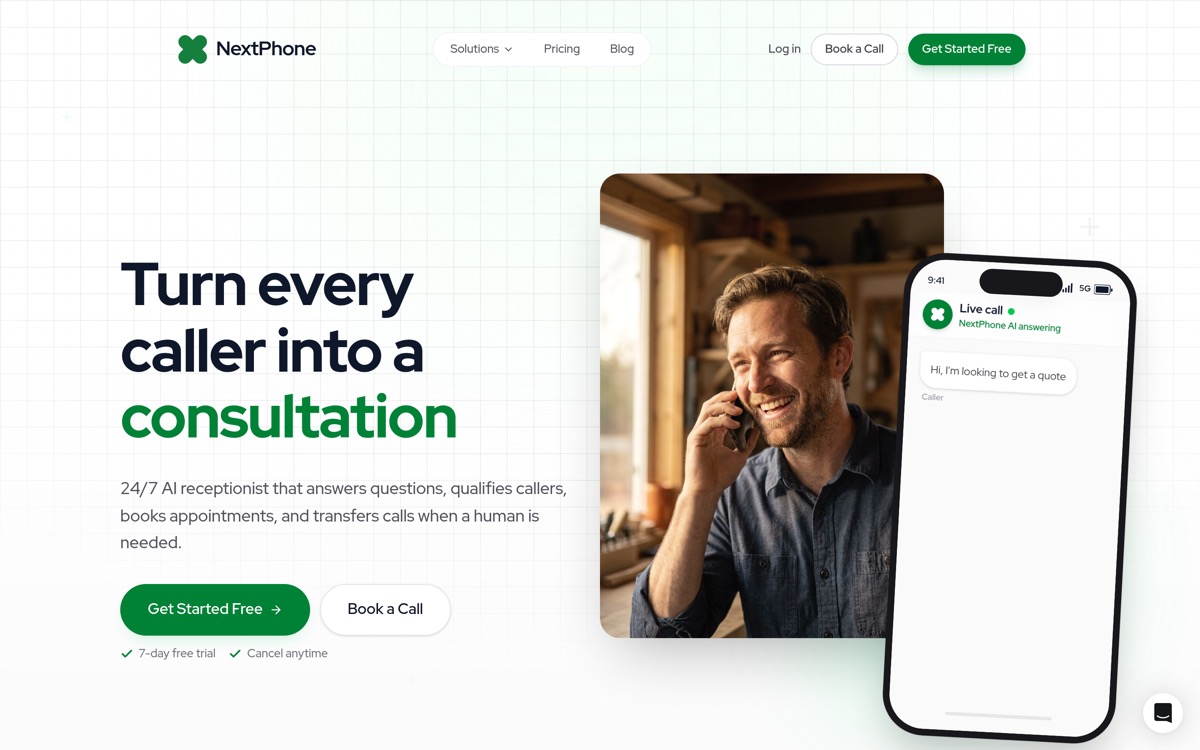
NextPhone is purpose-built for the solo-to-small-firm intake problem. It is the only flat-rate, no-meter, no-per-call AI receptionist in the legal-intake category. Same monthly bill whether you take 30 calls or 300, whether they hit at 10am or 2am.
The core stats:
In our analysis of 1,446,980 inbound calls, NextPhone resolves 90–95% of calls without human escalation, picking up in under 2 seconds, maintaining 99% positive caller sentiment, and never adding an overage charge regardless of call volume. Live answering services answer in 30–90 seconds and cap your monthly call count.
The integration story is what matters most for legal:
"NextPhone is natively integrated with Clio (legal practice management) and HubSpot (CRM). With Clio Manage the caller becomes a contact and the consult lands on your calendar; with Clio Grow a lead arrives with the call summary and every intake answer; no matters are created. HubSpot gets a contact record with the call details after the call. Jobber, MyCase, and Lawmatics also connect natively; ServiceTitan, Salesforce, PracticePanther, and 8,000+ other tools connect via Zapier."
What that means in practice: a 9pm DUI call gets answered in under 2 seconds, the AI captures the caller name, callback number, charge, court date, and custody status, and a Clio Grow lead with the summary and every intake answer is waiting when the call ends. You wake up to a triaged intake record, not a voicemail. For a deeper read on the workflow, see our legal intake services guide.
Other things to know:
- "NextPhone's AI receptionist supports 14 languages out of the box (verified against schema). Each call is handled in the language the caller speaks."
- Intake questions are fully configurable per phone line: you write what you want captured (cause of action category, jurisdiction, opposing party for conflict-check, retainer ability, anything else).
- Smart forwarding routes genuine emergencies (arrest, court deadline, restraining order) directly to your cell with full context.
- Flat monthly plans from $199, no setup fee, 7-day free trial. No per-minute, no per-call, no overage line items. CRM integrations, including Clio, start on the $299 Growth plan.
For more cluster context, see our law firm virtual receptionist overview and our practice-area pages on criminal defense answering service and answering services for bankruptcy attorneys.
Smith.ai: Hybrid Human/AI ($300/mo for 30 calls human tier)
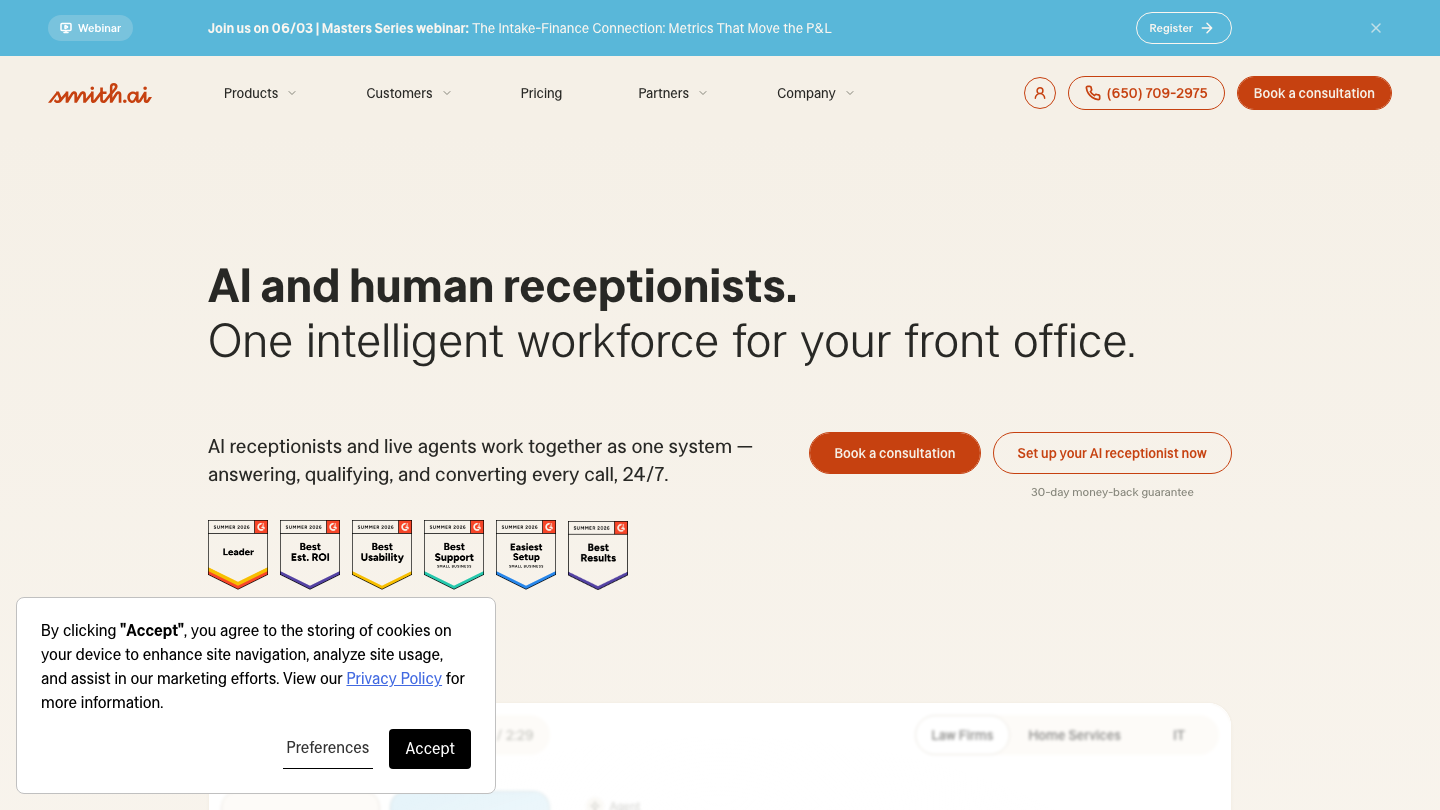
Smith.ai is the longest-tenured player in the legal-answering category and the best-known hybrid. AI handles initial screening; a North-America-based live agent picks up complex calls. For a firm that genuinely wants a human in the loop on every intake, this is a reasonable choice, but you pay for it.
Pricing: $300/month for 30 calls on the live-receptionist tier ($11.50 a call overage). The "calls" cap matters: a busy intake week torpedoes the math.
Best for: firms that explicitly want human-in-the-loop on every call and accept per-call pricing.
Ruby Receptionists: Pure Human Legacy ($250/mo for 50 minutes)
Ruby isn't an AI tool. It belongs in the answering-service conversation because every search for "best answering service for law firms" surfaces it, and we want to be honest about where it fits in 2026. Ruby is the premium pure-human option: US-based, warm, polished, professional. The price is the price.
| Vendor | Plan | Included | Monthly base | Overage |
|---|---|---|---|---|
| NextPhone Flat monthly plans, no overage | Flat AI receptionist | Unlimited inbound calls | From $199 | None |
| Smith.ai (Human) | 30 calls | 30 calls | $300 | $11.50/call |
| Smith.ai (AI) | Pro (75 calls) | 75 calls | $150 | $2.50/call |
| Ruby | 50 minutes | 50 minutes | $250 | $5.40/min (help center) |
| Posh | Vogue (50 minutes) | 50 minutes | $130 | $2.20/min |
| AnswerConnect Pricing page is a quote form (checked October 12, 2026) | Quote only | Quote only | Quote only | Quote only |
| Alert Communications Quote only; not part of the Price Index | Legal-only | Per-call billed | Quote-based | Per-call |
Best for: firms whose brand absolutely requires a human voice on every call and who can absorb the per-minute math.
What to look for in intake AI (checklist)
If you're evaluating any intake AI (not just the three above), these are the questions that matter:
- Native integration with your practice management tool (Clio, MyCase, Lawmatics, PracticePanther). Native beats Zapier on reliability and latency.
- Configurable intake questions per phone line (a PI line and a criminal-defense line capture different fields).
- Smart forwarding for emergencies with explicit criteria you write (not a black box).
- Multilingual support out of the box: Spanish at minimum.
- 24/7 coverage at the same price as business hours (per-minute services keep the meter running after hours, and some add an after-hours fee).
- Call recordings and transcripts accessible for compliance and review.
- No per-minute meter. Legal calls run long; meters punish that.
2. Legal Research AI: Westlaw, Lexis, Harvey, CoCounsel
This is the most-discussed category and the one with the most pricing opacity. Three real choices.
Lexis+ AI / Protégé (rebranded Feb 2026): ~$128-$494/user/mo, quote-based
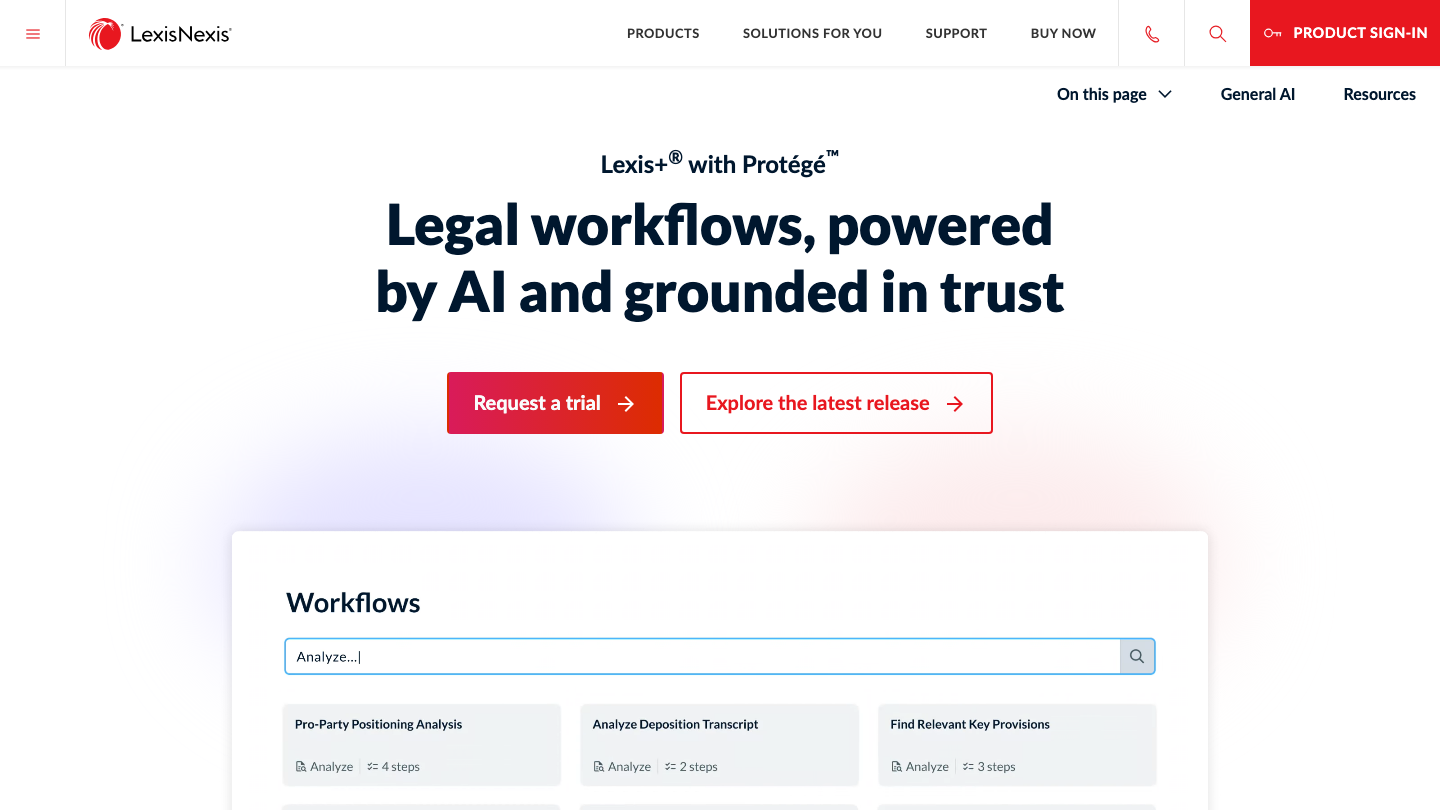
LexisNexis rebranded the AI product as "Protégé" in February 2026. It is the natural pick for any firm already on a Lexis subscription. Pricing is quote-based; published references put it in the $128-$494/user/mo range depending on tier and existing Lexis spend. Standalone AI-search transactions have been reported at $99/use and AI drafting at $250/use, useful to know so a transactional pricing surprise doesn't sneak up on you.
Best for: firms already on a Lexis subscription. Not worth migrating to Lexis just for the AI; it is worth turning on if you're already there.
Thomson Reuters CoCounsel: $225-$850/user/mo, bundled with Westlaw
CoCounsel Core is approximately $4,500/user/year ($225/mo, document work only). CoCounsel All-In is approximately $10,200/user/year ($850/mo) and adds the broader research capabilities. Westlaw is required underneath and adds $200-$400/mo per seat. CoCounsel does not sell standalone; if you don't have Westlaw, this is not the path.
Best for: firms already on Westlaw, especially mid-market and BigLaw.
Harvey: Enterprise only ($1,000-$2,000/seat/mo, 25-50+ seat minimum)
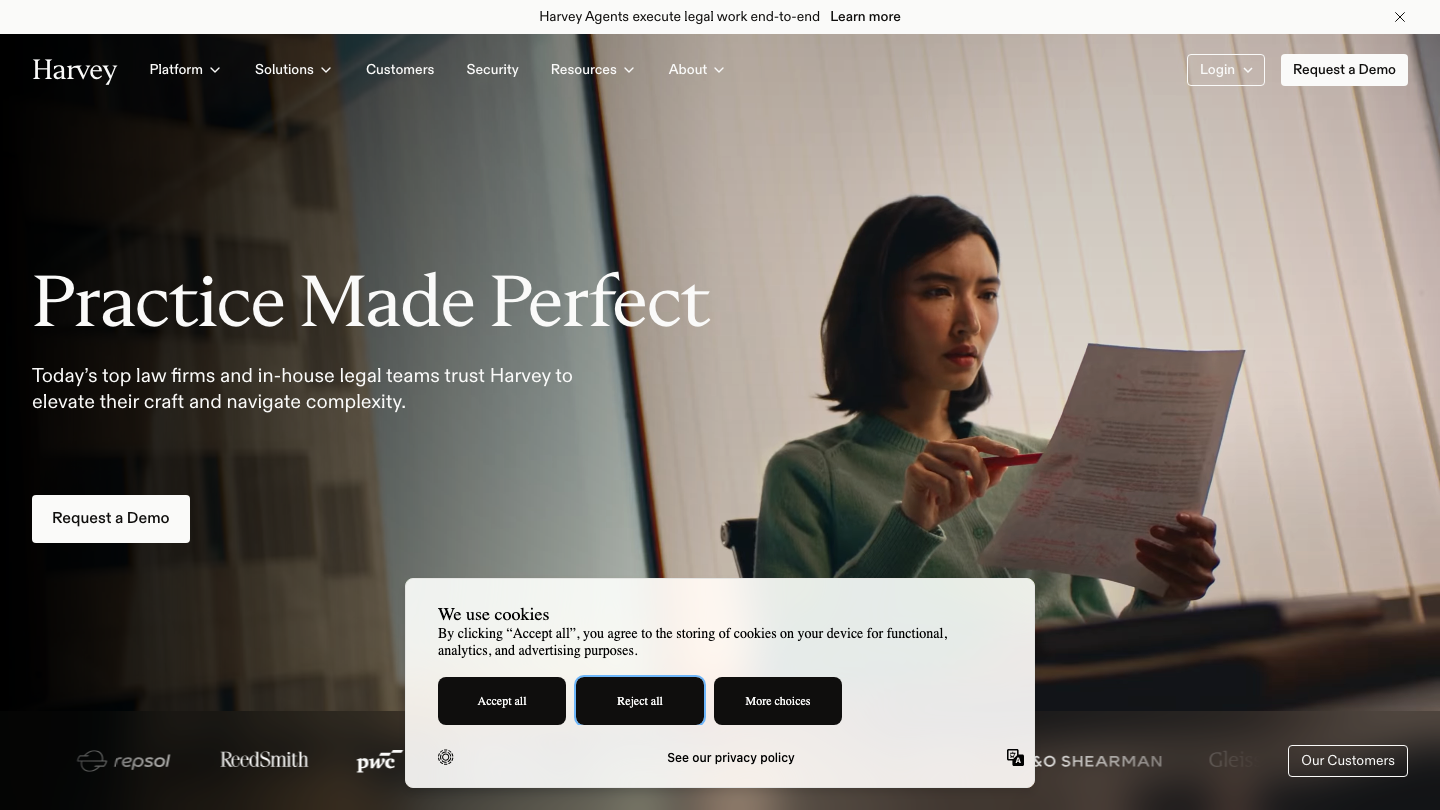
Harvey raised at an $11B valuation in early 2026 and continues to build agentic workflows for BigLaw. The economics make it structurally off-limits for SMB firms: published enterprise contracts run $50K-$200K/year with no self-serve tier and a hard 25-50+ seat minimum. Harvey's own pricing page offers only a demo request (read October 2026).
Best for: BigLaw firms with the seat count and budget to absorb a six-figure annual commitment. Solos and small firms: skip it. If a vendor or consultant is pitching Harvey to a 5-attorney firm, push back.