You're on a roof. Midday sun, 90 degrees, running conduit through an attic. Your phone buzzes in your pocket. A homeowner just submitted a quote request after researching solar for the past three weeks. They want to talk now.
But you can't answer. Your hands are full. By the time you call back two hours later, they've already booked with your competitor who picked up on the first ring.
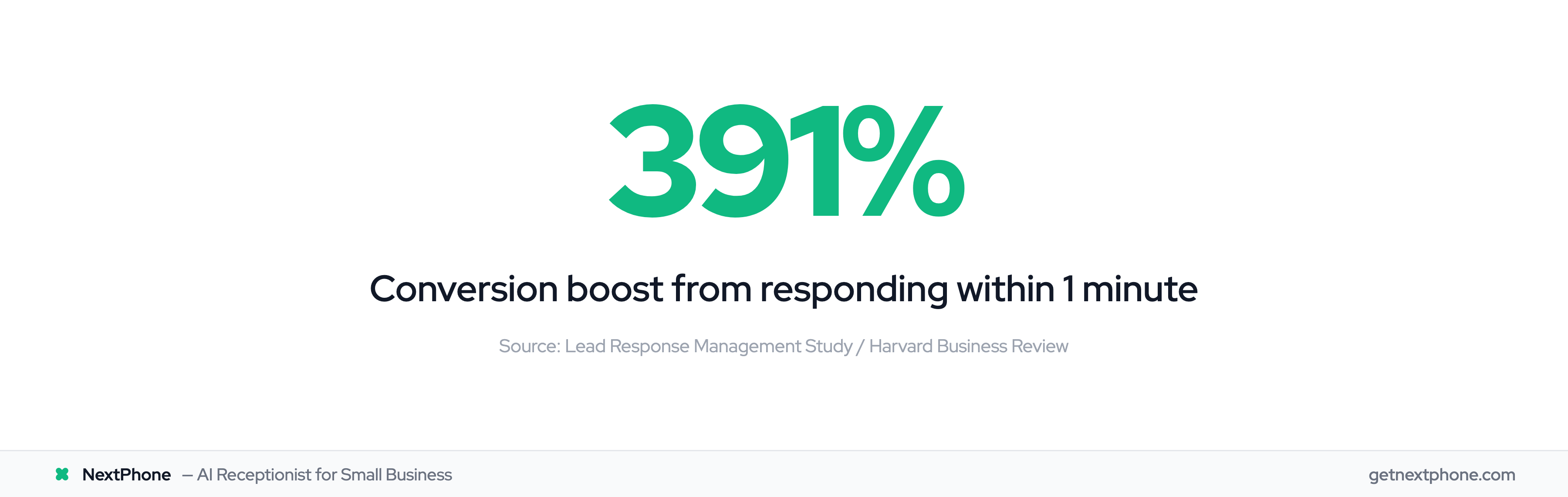
That lead cost you $200 or more. And according to speed-to-lead research, calling within the first minute boosts your conversion rate by 391%. Wait 30 minutes? Your odds drop by 10x. The first company to respond wins 78% of solar sales.
This guide breaks down how solar answering services work, what they cost, and how to choose one that actually qualifies your leads instead of just taking messages.
Why Solar Companies Miss So Many Calls
The Rooftop Problem
Solar installers aren't sitting at desks. They're on ladders, in attics, pulling wire through conduit, and hauling panels onto roofs. Answering phone calls while 30 feet up isn't just inconvenient - it's dangerous.
Industry research puts the missed-call rate for home services contractors at 74.1%, with those calls going completely unanswered. That's three out of every four potential customers calling someone else because no one picked up.
For solar companies specifically, the problem compounds. Installation days are long - often 6-10 hours of physical work where checking your phone simply isn't possible.
Seasonal Call Surges
Solar inquiries don't arrive at a steady pace. They spike when:
- New federal or state incentives get announced
- Utility rates increase
- Extreme weather hits (everyone thinks about power during outages)
- Neighbors install panels and spark local interest
These surges overwhelm small teams. One installer might handle 15 calls a week normally, then face 50+ after a rate hike makes headlines. Without backup, most of those calls hit voicemail.
After-Hours Inquiries
Homeowners research solar after work. They're comparing quotes at 8 PM, reading reviews on Saturday morning, and finally picking up the phone Sunday afternoon. Industry data confirms that 30-35% of calls to service businesses come outside traditional 9-5 hours.
For solar specifically, the percentage is likely higher. Families making a $25,000+ decision don't rush. They research on their own time - which rarely aligns with your office hours.
The Spam Call Reputation Problem
Here's a challenge unique to solar: the industry's reputation took a hit from aggressive telemarketers. Homeowners report receiving 10-20 solar spam calls daily from companies using phony names and high-pressure tactics.
This means legitimate solar companies face skepticism before they even answer. When a potential customer calls and reaches a professional voice instead of chaos or voicemail, it immediately signals you're different from the scammers.
The Real Cost of Missing Solar Leads
What Solar Leads Actually Cost
Let's talk numbers. According to industry data, solar lead costs vary significantly:
- Shared leads: $15-75 each
- Exclusive real-time leads: $50-300 each
- Pre-set appointments: $150-350 each
- Average cost per lead across channels: $206
And that's just the lead. McKinsey research notes that total customer acquisition costs in residential solar can approach $10,000 per closed sale - roughly 25% of a typical $40,000 installation.
The Math: Missed Calls = Wasted Marketing Spend
Here's how the damage adds up for a typical solar installer:
- Average calls per month: 42
- Missed calls at 74.1% rate: 31 per month
- Percentage that were qualified leads: ~20%
- Lost appointment-ready calls: 6 per month
- Cost per appointment: $200 average
Monthly wasted lead spend: $1,200
That's money you already spent on marketing, SEO, or lead services - gone because no one picked up.
Lost Revenue Beyond the Lead Cost
The $1,200 in wasted leads is just the beginning. Those 6 missed appointment-ready calls represent actual revenue:
- 6 appointments
- 20% close rate = 1.2 sales per month
- Average installation: $15,000
- Monthly lost revenue: $18,000
One installer we spoke with put it simply: "I didn't even know I was missing that many calls until I saw the data. I just thought business was slow."
Speed-to-Lead: Why Response Time Determines Solar Sales
The 1-Minute Rule
Solar sales move fast. Homeowners requesting quotes are often comparing 2-3 companies simultaneously. The one who calls back first has an enormous advantage.
Research from the Lead Response Management Study (published in Harvard Business Review) confirms what solar veterans already know:
- 1-minute response: 391% conversion boost
- 5-minute response: 100x more likely to connect than 30 minutes
- 30-minute response: Contact rates drop 10x from the 5-minute mark
First Responder Advantage
Here's the stat that should change how you think about phone coverage: 78% of customers buy from whichever company responds first.
Not the cheapest. Not the best reviewed. The first one to pick up the phone.
When a homeowner is actively researching solar - calculator open, utility bills in hand, ready to talk numbers - they want answers now. The company that provides them wins the business.
How Response Time Decays Lead Quality
Lead quality doesn't stay constant. It deteriorates by the minute:
- 5 minutes: Peak opportunity - caller is engaged, ready to talk
- 30 minutes: 10x lower contact rate - they may have moved on
- 1 hour: 7x less likely to qualify than under 1 hour
- 24 hours: 60x less likely to qualify - they probably bought elsewhere
For solar companies, where the sales cycle can stretch weeks, that initial response window is your only guaranteed touchpoint. Miss it, and you're chasing someone who's already talking to your competitor.
What Solar Answering Services Actually Do
A solar answering service isn't just someone taking messages. Done right, it's an extension of your sales team that handles the front end of lead qualification.
24/7 Call Coverage
The core function: every call gets answered within seconds, whether it comes at 2 PM Tuesday or 9 PM Saturday. No voicemail. No "we'll call you back." Immediate human (or AI) interaction.
For solar companies, this matters because homeowner inquiries cluster in evenings and weekends. Missing those calls means missing your highest-intent prospects.
Lead Capture and Qualification
Beyond answering, the service captures critical information:
- Caller name and phone number
- Property address
- Email for follow-up
- Reason for calling
- Qualifying details (more on this below)
This data gets logged and sent to you immediately - via text, email, or directly into your CRM.
Appointment Scheduling
Good answering services can book consultations directly. They access your calendar, see available slots, and schedule site assessments without you lifting a finger.
The homeowner gets an appointment confirmed on the spot. You get a calendar invite with all their details attached.
CRM and Software Integration
Modern answering services push data directly to your existing tools:
- CRMs: HubSpot, Salesforce, Zoho
- Calendars: Google Calendar, Calendly
- Communication: Slack, email, SMS alerts
No manual data entry. No leads falling through cracks because someone forgot to log a call.
Emergency Routing
For urgent situations - a hot lead who wants to sign today, an existing customer with a system issue - the service can transfer calls directly to your cell. You handle the high-priority stuff; they handle the routine.
How to Qualify Solar Leads (The Questions That Matter)
Not every call is a qualified lead. Training your answering service on the right questions separates price-shoppers from buyers.
Property Ownership Verification
The single most important qualifying question: "Do you own your home?"
Renters can't install solar. Neither can most condo owners or anyone in housing with restrictive HOAs. This one question eliminates a significant percentage of unqualified inquiries.
Roof and Property Suitability
Next, assess whether the property can actually support solar:
- Roof age: "Approximately how old is your roof?" Roofs over 15-20 years may need replacement before installation.
- Roof type: Some materials (slate, cedar shake) are more complex to work with.
- Shading: "Are there large trees or buildings that shade your roof?" Heavy shading tanks solar production.
- HOA restrictions: "Do you have a homeowners association? Have you checked their solar policy?"
Financial Qualification
Solar is a significant purchase. Understanding financial readiness saves everyone time:
- Monthly electric bill: "What's your average monthly electric bill?" Under $100/month often means solar doesn't pencil out economically.
- Financing interest: "Are you planning to finance, pay cash, or explore leasing options?"
- Credit situation: For financed installations, credit scores matter. A gentle qualifying question can identify issues early.
Timeline and Intent
Understanding where the caller sits in their buying journey:
- Timeline: "When are you hoping to have a system installed?"
- Comparison shopping: "Have you received other quotes?" (Not disqualifying - just contextual)
- Decision makers: "Will anyone else be involved in this decision?"
Red Flags to Watch For
Train your service to note warning signs:
- Rental properties
- Extremely low electric bills
- Major roof repairs needed
- Strong HOA opposition
- No decision-making authority
- "Just curious" with no real intent
These calls still get handled professionally, but they're flagged differently than hot leads ready to book assessments.