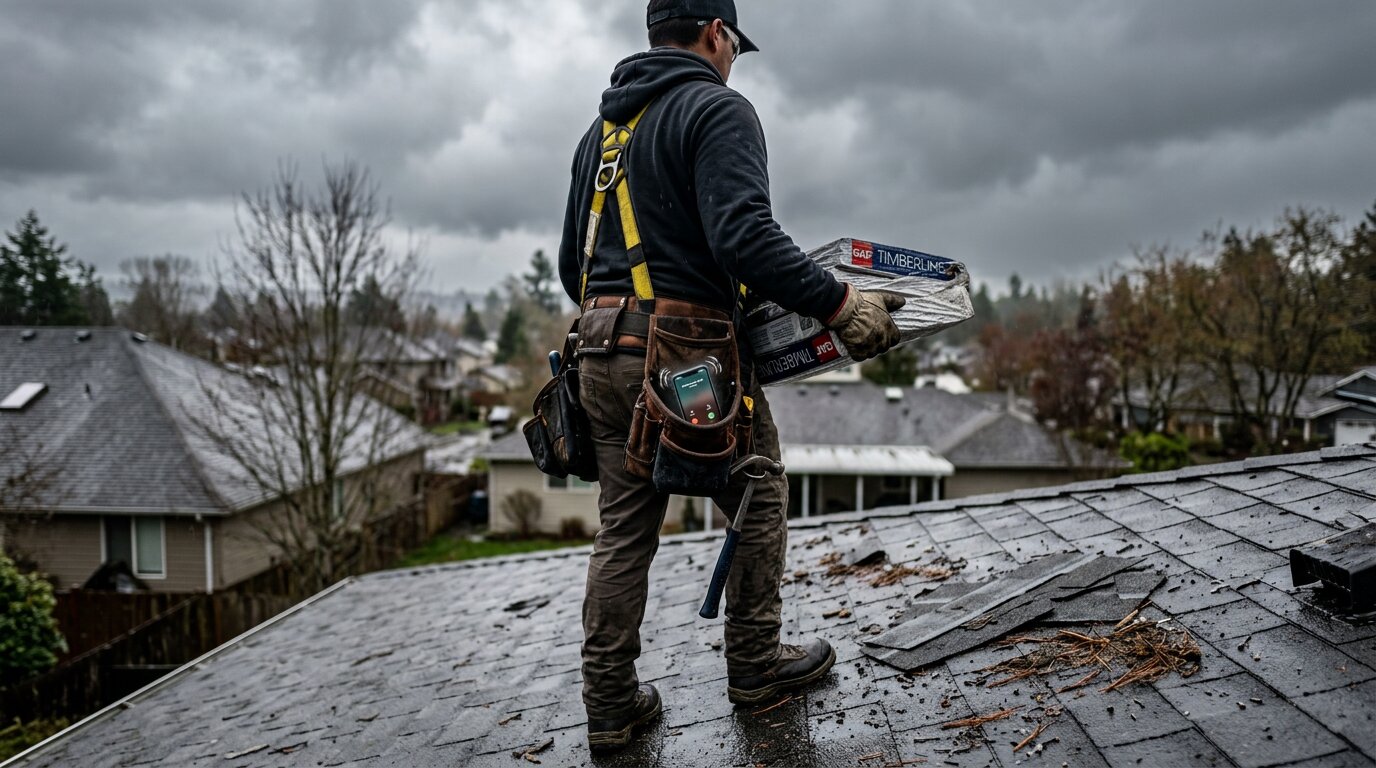
A storm rolls through Tuesday night. Hail, wind damage, a few downed trees. By Wednesday morning, your roofing company's phone starts ringing at 7 AM and doesn't stop. You normally get 30 calls a day. Today, you get 200.
You answer maybe 40. Your voicemail fills up. The other 150+ callers? They're dialing every roofer in the phone book until someone picks up.
That's what surge looks like. And it exposes every weakness in your call handling system.
The businesses that win during surge aren't necessarily bigger or better staffed. They're the ones with systems that scale. Here's how to build yours, whether you're preparing for Black Friday, tax season, summer AC rush, or the next unpredictable storm.
Understanding Your Surge Patterns
Not all surges are created equal. Understanding what type you're facing determines how you prepare.
Predictable Seasonal Surges
These happen at the same time every year. You can see them coming months in advance:
- Retail: Black Friday through December (holiday shopping)
- Accounting: January through April (tax season), October (extension deadline)
- HVAC: June through August (AC rush), December through February (heating emergencies)
- Landscaping: Spring cleanup season, fall leaf removal
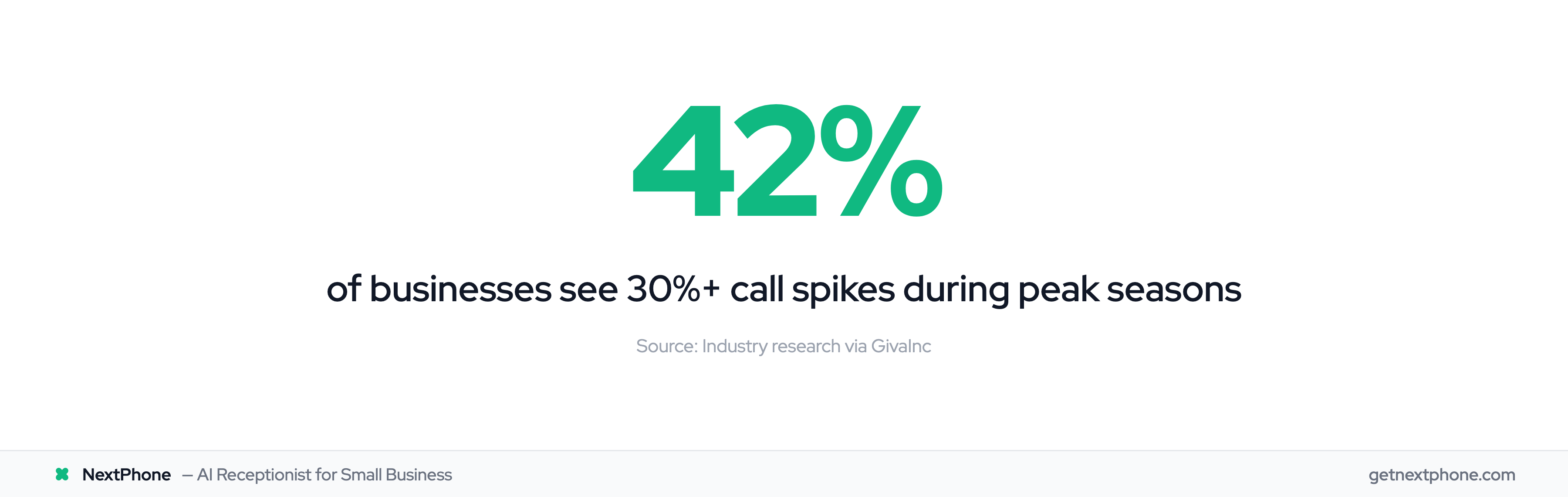
61% of call center managers report significant volume increases during peak periods. Research shows 42% of businesses experience significantly higher inbound calls during peak seasons, with volume spikes reaching 30% or more above typical daily rates. For some industries, like HVAC during a heat wave, that number can hit 300-500%.
Unpredictable Event-Driven Surges
These hit without warning. You can't schedule around them; you can only be ready:
- Roofing/Contractors: Post-storm damage (hail, hurricane, tornado)
- Tree Service: After high winds or ice storms
- Plumbing: Frozen pipe season, water main breaks
- Electrical: Power outage aftermath
The window is narrow (usually 24-72 hours) and intense. A roofing company might see 500% normal volume in the 48 hours after a major hail storm.
Why This Matters
If you know a surge is coming (tax season, summer), you can prepare. If you can't predict it (storms), you need systems that scale instantly without advance planning.
Why Traditional Surge Strategies Fail
Most businesses try to handle surge the old-fashioned way: hire more people or route overflow to an answering service. Both approaches have serious problems.
The Hiring Problem
Seasonal staffing sounds logical. Tax season is coming, so hire some temporary phone help in December.
But hiring takes time. Posting the job, interviewing, onboarding, training: you're looking at 2-4 weeks minimum. And new staff aren't effective immediately. They don't know your services, your pricing, your customers. By the time they're useful, the surge might be half over.
For unpredictable surges (storms), hiring isn't even an option. The surge is here now, not in two weeks.
The Overflow Cost Explosion
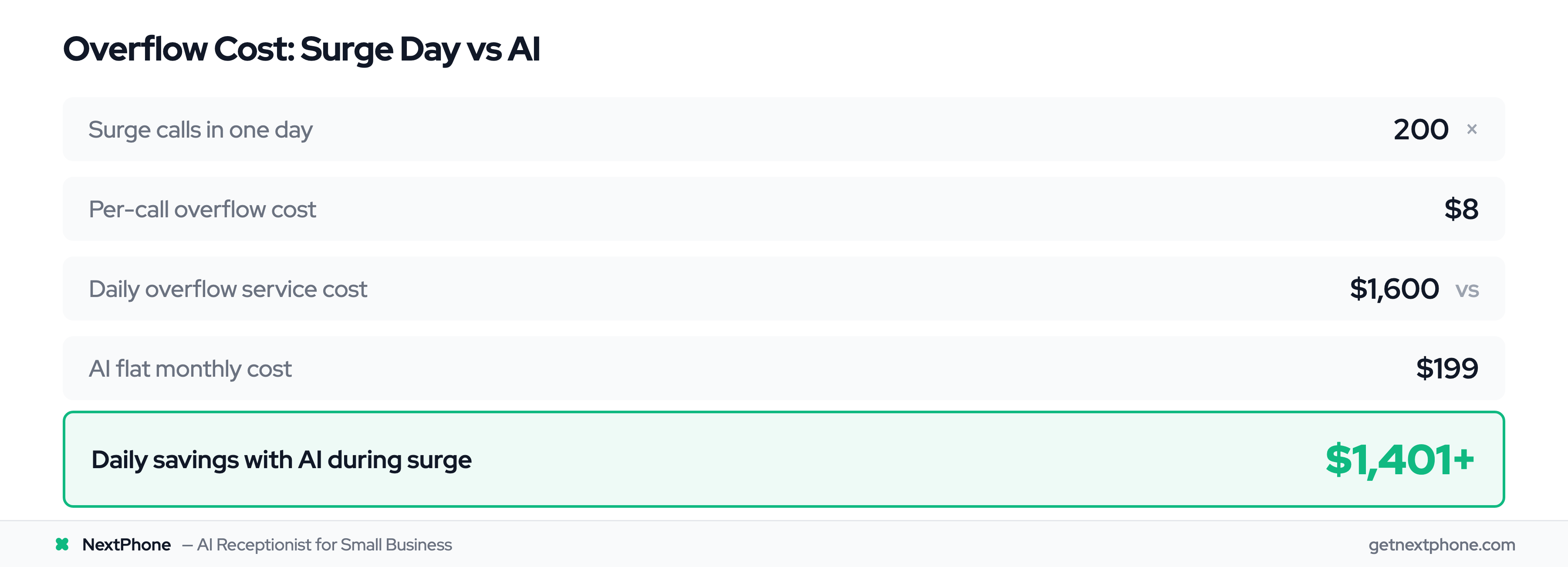
Overflow answering service providers charge per call, typically $5-15 per interaction. During normal months, that's manageable. During surge? The math gets ugly fast.
200 calls in a day × $8 per call = $1,600 in overflow fees. In a single day.
Worse, these services often aren't equipped for true surge volume. They have finite capacity too. Your calls might still go unanswered or hit extended hold times.
The Missed Call Penalty
Industry research shows 74.1% of calls to home services businesses go completely unanswered during normal operations. During surge periods, that number climbs higher.
And the calls you miss during surge are often your highest-value opportunities. Emergency HVAC calls during a heat wave average $4,200, significantly more than routine maintenance. Storm damage repairs command premium pricing. Tax deadline panics convert at higher rates.
Missing calls during surge doesn't just cost you revenue today. It hands your competitors customers who might have become long-term clients.
Preparing Before the Surge Hits
For predictable surges, preparation is everything. What you do 30 days before peak season determines how smoothly you handle volume when it arrives.
30 Days Before: Configuration and Testing
Update your greeting. Callers should know what they're walking into:
"Thanks for calling [Business]. Due to high demand during [season/event], response times may be longer than usual. For fastest service, [alternative action: book online, leave detailed voicemail, etc.]."
Configure priority routing. Not all surge calls are equal. Emergencies should jump the queue. Routine inquiries can wait.
Test your system under load. Have team members call simultaneously. Does your routing work? Do messages get through? Does voicemail have capacity?
Prepare surge-specific scripts. If you're offering surge pricing or extended wait times, script exactly how you'll communicate that.
7 Days Before: Final Readiness Check
- Greeting updated and recorded
- Emergency routing rules active
- Callback scheduling system enabled
- SMS templates ready for volume notifications
- Staff schedule confirmed for peak period
- Surge pricing scripts approved (if applicable)
- Knowledge base updated with seasonal FAQs
Surge Communication Setup
Customers are more forgiving during surge if you set expectations. They understand Black Friday is busy. They know everyone needs AC when it's 100 degrees.
What frustrates them is silence. Getting no answer, leaving a voicemail that disappears, waiting on hold with no information.
Your communication should:
- Acknowledge the high-demand period
- Provide realistic timeline expectations
- Offer alternatives (online booking, callback scheduling)
- Explain priority triage if you're handling emergencies first
How AI Handles 10x Volume Without Breaking
Here's where AI changes the surge equation entirely.
Traditional solutions (hiring, overflow services) have finite capacity. Ten phone lines can only handle ten simultaneous calls. Ten agents can only talk to ten callers at once.
AI doesn't have those limits.
No Per-Call Limits
An AI receptionist answers call 1 and call 100 with the same speed, typically under 5 seconds. There's no queue, no hold time, no "please wait while we connect you."
During your 200-call storm surge day, every single caller gets an immediate answer. They're greeted, their issue is captured, and they're either routed to the right person, scheduled for callback, or given the information they need.
Consistent Response Time at Any Volume
Human teams degrade under pressure. Response times stretch. Patience wears thin. Mistakes increase.
AI doesn't get overwhelmed. The 100th call gets the same quality as the first. No fatigue, no frustration, no "we're really busy right now" tension in the conversation.
No Training Required for Surge
Your AI is already trained. It knows your services, your hours, your pricing, your FAQs. When surge hits, there's no onboarding period. It's ready day one.
And the cost? Flat monthly fee. A surge that would cost $1,500 in overflow fees costs $0 in overage with AI. NextPhone runs $199/month for unlimited calls, whether you get 100 or 1,000.
Black Friday Protocol: E-commerce and Retail Surge
Black Friday through Cyber Monday represents the most intense predictable surge for retail businesses. Here's the playbook.
Volume Expectations
Expect 5-10x normal call volume on Black Friday itself, with elevated volume (2-3x) through the end of December. Peak hours are typically 8-10 AM as stores open and 6-9 PM as people get home from work.
Greeting and Routing Configuration
Recommended greeting: "Thanks for calling [Business]. We're experiencing high call volume due to our Black Friday sale. For fastest service, shop online at [URL]. To check an existing order, press 1. For all other inquiries, press 2 or stay on the line."
Routing priorities:
- Payment/checkout issues (highest priority: recover the sale)
- Order status inquiries (route to automated lookup if possible)
- Return policy questions (handle with FAQ automation)
- Product inquiries (can wait; they can shop online)
Common Holiday Call Types
- "Where's my order?" (Provide tracking tools online)
- "Can I return this after Christmas?" (Clear return policy in greeting)
- "Is [item] in stock?" (Route to inventory lookup or website)
- "My payment didn't go through" (Priority routing to human)